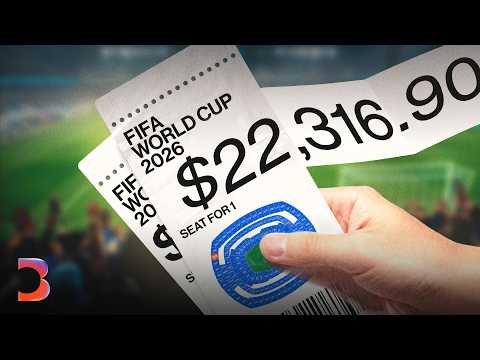
The 2026 World Cup, spanning three nations and 104 matches, represents FIFA's most aggressive monetization effort to date. While tournament organizers project record revenue, the central tension pits FIFA's profit-driven model—relying on dynamic pricing and resale commissions—against host cities and fans who must subsidize infrastructure and manage spiraling participation costs.
The Case
FIFA is using dynamic pricing—adjusting ticket costs hourly or daily based on market demand—alongside a proprietary resale platform that collects commissions from both buyers and sellers.0:40
Host cities, which front substantial costs for security, transport, and fan fests, frequently project economic gains that historical data contradicts: nearly every host nation since the tournament's inception has lost money, with Russia as the only noted exception.3:50
The U.S. federal government has committed $625 million toward security across 11 host cities, a figure critics describe as insufficient for a project of this unprecedented scope.4:55
Access barriers for international fans extend beyond record prices; visa friction and immigration policies have sparked petitions from thousands of fans who now intend to boycott the event.1:34
FIFA’s response to affordability concerns—an available $60 ticket tier—accounts for less than 2% of the total ticket supply.10:10
FIFA President Gianni Infantino is actively cultivating political access, most notably by creating a "FIFA peace prize" to present to Donald Trump after the former president expressed frustration over his own lack of a Nobel Peace Prize.7:37
The 1 Minute Signal Take
The evidence suggests this World Cup is optimized for corporate revenue and global broadcast reach rather than a widely accessible in-stadium fan experience. The financial risk is increasingly socialized onto local taxpayers, while the upside remains tightly held by FIFA. This video is worth watching for the specific breakdowns of how secondary ticket markets and municipal transit costs are being manipulated to inflate the public's investment in event-day access.
Pro Analysis
Strategic Significance
The tournament represents a test case for whether global sports monopolies can successfully extract maximum rev...