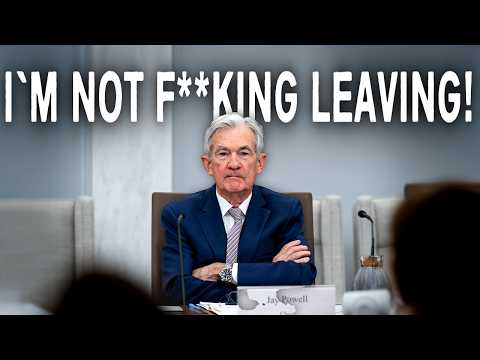
WTF is Going On at The FED?

Video thumbnail: WTF is Going On at The FED?
May 1, 202619m 2s video lengthHow Money Works

The Signal

Jerome Powell’s departure as Fed chair is less a transition of power than an institutional gridlock. Because his governor seat remains secure until 2028, Powell holds a statutory veto over his own succession that the White House's pressure tactics—including a now-dropped DOJ investigation—have failed to override. The central tension is whether the Federal Reserve can maintain policy independence while facing an administration demanding lower rates amidst a fragile macro environment.

The Case

  • Powell’s chair term ends in roughly 14 days, but he maintains a seat on the seven-member Board of Governors until 2028, potentially blocking a new nominee unless a vacancy occurs.0:44
  • Kevin Warsh, the nominee to replace Powell, faces a stalled Senate confirmation due to concerns over his personal wealth, investments, and professional ties to Jeffrey Epstein, though the bottleneck is as much about political standoff as ethics.0:21
  • The DOJ investigation into Fed headquarters renovations—estimated at $2.5 billion with $1 billion in overruns—was widely viewed as a political pressure point; its recent abandonment by the DOJ leaves the administration without its primary lever to force Powell out.
  • The next interest rate decision sits 45 days away, occurring alongside a volatile mix of tariff-driven inflation, energy shocks from the war in Iran, and potential labor disruption caused by AI-linked layoffs.1:53
  • Critics argue that official economic data, specifically payroll numbers and labor force shifts, are increasingly detached from reality, complicating the Fed's ability to set policy based on accurate inputs.13:32
  • Experts warn that cutting rates in the current climate might spark a loss of faith in the dollar, pushing the 10-year Treasury yield—which has already risen 40 basis points during the conflict—higher, ironically raising borrowing costs across the economy.16:52

The 1 Minute Signal Take

This analysis accurately identifies the structural deadlocks inherent in the Fed's appointment process, though its broader claims about market “reality” versus official data are assertions rather than proven facts. Watch the video if you want the full sequence of these organizational constraints, but skip it if you are looking for a definitive resolution on the Fed’s next move, as that remains firmly unsettled.

Pro Analysis

Strategic Significance

This matters because the Federal Reserve acts as the ultimate guarantor of U.S. financial stability. The current succession crisis exposes that the Fed’s "independence" can be easily circumvented or paralyzed when the executive branch weaponizes investigative power against sitting governors.

Who Should Care

  • Institutional Investors: Anyone holding long-term Treasury bonds should monitor the board-seat conflict, as this institutional friction increases the risk of policy errors that could spike long-term yields.
  • Economic Analysts: Those tracking inflation must reconcile the disconnect between the official job reports and the underlying metrics of the labor force.

Contrarian Takeaway

The biggest threat to the economy is not high interest rates, but the potential for the Federal Reserve to lose control of the long end of the yield curve by cutting rates too early, effectively forcing a market-driven tightening of borrowing costs that the Fed cannot reverse.

Time saved:16m 29s

Share this