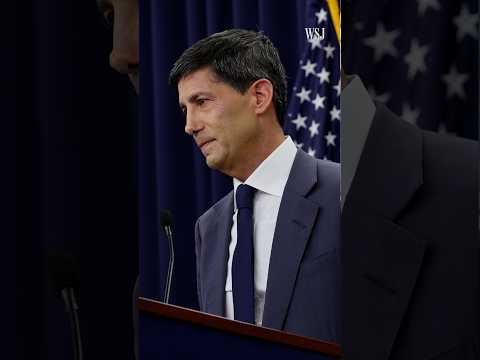
Three Key Takeaways From Fed’s Decision to Hold Rates Steady

Video thumbnail: Three Key Takeaways From Fed’s Decision to Hold Rates Steady
Jul 30, 20262m 5s video lengthThe Wall Street Journal

The Signal

The Federal Reserve held interest rates steady at just above 3.5%, but internal consensus is fracturing. Three officials dissented, an unusual occurrence last seen a decade ago. While officials maintain that policy works with a time lag, the underlying tension is whether inflation’s upward trend necessitates an immediate move or if recent market-driven tightening is sufficient.

The Case

The Internal Split

  • The Federal Reserve held interest rates at just above 3.5%, but the decision prompted three dissents from the board. This specific manifestation of internal disagreement has not been seen in roughly 10 years, signaling significant discomfort with the current policy path.0:06
  • The dissenters argue that the Fed should raise rates because inflation has risen at a time when officials expected it to fall, even as the labor market remains solid.1:01

The Counter-Argument

  • Kevin Worsh, a member of the Board of Governors, justified holding current rates by pointing to financial conditions that have tightened since his June arrival.1:20
  • Because market interest rates have risen since June, the cost of mortgages and personal loans has become higher even without direct Fed action, which officials frame as a natural cooling process that requires time to flow through the economy.

Looking Ahead

  • The immediate policy window is delayed until the next meeting in September. The central question for observers is whether the minority in favor of hikes gains momentum, and whether Worsh—whose current threshold for support remains underspecified—might eventually join them.1:44

The 1 Minute Signal Take

The immediate policy decision is secondary to the widening internal split within the Federal Reserve. Watch the September meeting to see if the dissenting coalition expands, which would signal that the central bank’s current wait-and-see posture is failing to contain rising inflation concerns.

Pro Analysis

Why It Matters

The emergence of a three-way dissent suggests that the Fed’s 'resolute' image is under significant strain. When high-level officials begin breaking ranks in triple-digit frequency, the certainty markets rely upon begins to evaporate, causing potential volatility in bond and equity pricing.

Strategic Implications

The Fed is currently attempting to balance 'active' policy (hiking rates) against 'passive' policy (letting market-rate increases do the work). If the Fed waits too long and the market's current trajectory fails to curb inflation, they will likely be forced into a reactive, sharper hike that could shock the broader economy more severely than incremental moves.

Evidence & Hype Audit

The content relies heavily on narrative assessment (e.g., 'labor market is doing fine') without citing specific data series. It is highly trustworthy regarding the event (votes and dissents), but speculative regarding the rationale and future implications.

Counterarguments

Critics of the 'hold' strategy argue that waiting for market tightening is inherently lagged. By the time market data reflects the need for higher rates, the inflation trend might already be entrenched, necessitating a harsher intervention than what might be currently required.

Who Should Care

  • Institutional Investors: Use the dissent count as a leading indicator of volatility risk.
  • Loan Seekers: Watch the September meeting results as a preview of whether borrowing costs will continue to escalate.
  • Policy Analysts: Focus on Worsh's evolving rhetoric for signals on his trigger threshold.

What to Do Next

  • Compare September’s vote count against the current three-dissent baseline.
  • Monitor mortgage and corporate bond yields for signs that market-driven tightening is plateauing.
  • Reevaluate inflation-hedge portfolios in light of persistent upward price trends.
  • Anticipate higher volatility as the market prices in the uncertainty of a fractured Fed board.

Share this

Tags

Written by: 1 Minute Signal Editorial Team