
Channel: Financial Times
What to expect from the Federal Reserve this week | FT #shorts
The Signal
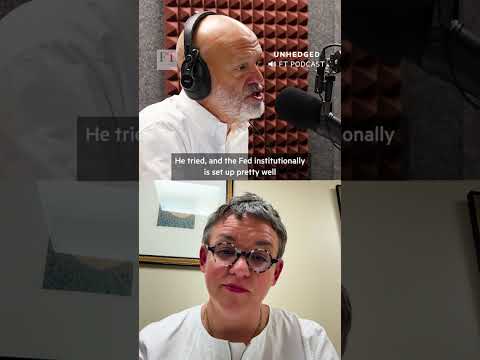
This briefing addresses whether the Federal Reserve faces a de facto political 'third mandate' to manipulate interest rates. While some observers fear the central bank will bend to administration pressure ahead of the November midterm elections, the discussion highlights institutional barriers against such interference. The central tension pits the possibility of election-year political scrutiny against the Federal Reserve's long-standing design as an independent shield against presidential demands.
The Case
- A recurring live question in financial commentary is whether the Federal Reserve will face mounting pressure to cut interest rates as the November midterm elections draw nearer.
- One speaker introduces a 'third mandate' theory—the idea that the Fed is expected to bend toward political convenience—but characterizes it as something he views with deep skepticism.
- Institutional independence remains the primary defense against pressure, with the Federal Reserve described as structured to 'dig in its heels' regardless of the sitting president's desires.
- The prior confrontation between Donald Trump—the former U.S. president—and Federal Reserve Chair Jerome Powell is cited as a key historical precedent where a presidential push to force policy changes failed spectacularly.
- A Fed chair is constrained less by the threat of presidential disapproval than by the judgment of history and the permanent threat of ridicule from professional finance peers.
The 1 Minute Signal Take
The video is a useful primer on the incentive structures that theoretically insulate the Federal Reserve from political cycles. While it effectively steelmans the argument for institutional independence, it offers little empirical evidence for its claims, relying mostly on the speaker's assessment of past events. Watch this if you want to understand the current political framing of the Fed; skip it if you are looking for a data-driven analysis of recent rate-setting dynamics.
Time saved:
Tags
Channel: Financial Times