A proper guide to Fable 5

Video thumbnail: A proper guide to Fable 5
Jul 6, 202643m 15s video lengthTheo - t3․gg

The Signal

Fable 5 represents a technical discontinuity in software shipping, but only when used with active orchestration rather than passive prompting. The speaker’s experience demonstrates that high-reasoning models require specific routing, sub-agent delegation, and staging gates to avoid cost inflation and model over-thinking, essentially reframing AI not as a coding assistant, but as an autonomous task processor.

The Case

Workflow and Strategy

  • The speaker cleared a significant Lakebed backlog by triaging 16 stale pull requests across 48 automated agents in five hours, merging or closing them based on agent-led investigations.5:05
  • Coding tasks are managed through a staged process: workflows handle fan-out verification, sub-agents decompose work, and human judgment stays firmly in the loop for production deployments.12:52
  • Execution time serves as a codebase health diagnostic: tasks completing in under three minutes indicate simple fixes, while work exceeding one hour suggests deeper architectural friction.40:26

Model Configuration

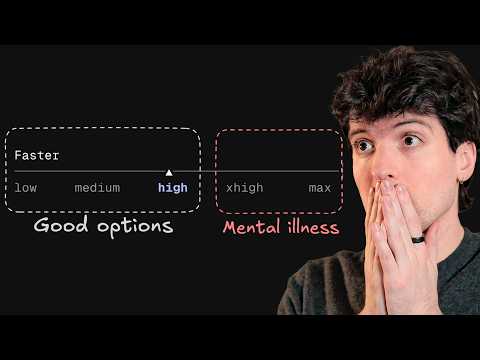
  • The speaker advises defaulting to "high" reasoning, explicitly cautioning that "X high" or "max" settings increase costs and worsen code quality by triggering unnecessary loops and over-analysis.7:44
  • Performance depends on explicit model routing: heavyweight computer-use, browser automation, and massive token-processing tasks are delegated via skills to Codex/55, while Claude acts as the primary reasoning orchestrator.10:14
  • Instruction files like 'claude.md' are treated as living documentation to define personal glossaries, tech preferences, and task-based routing logic for the model to follow.11:45

Practical Execution

  • Cross-machine parallelization is enabled by T3 Code—an open-source mobile and remote-access tool—allowing the speaker to manage deployments and code trees from a phone while traveling.
  • Task-based routing prioritizes intelligence over cost, yet the multi-model architecture reduced the speaker's spend on a large work burst to roughly $150 by avoiding inefficient over-processing.7:01
  • The speaker emphasizes that users must customize agent instructions iteratively after failures, as blindly copying shared configurations often leads to model confusion.20:05

The 1 Minute Signal Take

The core takeaway is a shift from treating models as chat interfaces to treating them as programmable systems where routing, staging, and diagnostic monitoring are required to maintain quality. If you are building with these agents, your primary value as an engineer is not writing the code, but designing the routing logic and safety gates that prevent the model from outrunning your architecture.

Pro Analysis

Why It Matters

This content is significant because it provides a bridge between 'AI chat' and 'AI engineering.' Most users encounter AI ...
Full analysis always available on Pro.

Time saved:41m 13s

Share this

Tags

Written by: 1 Minute Signal Editorial Team