
Back to Feed
Can there ever really be “one China?”
The Signal
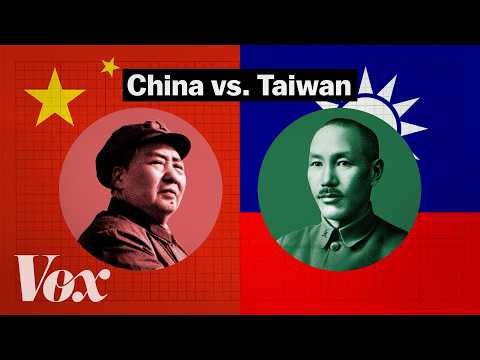
Taiwan’s core identity has fundamentally shifted from identifying as the Republic of China to asserting a distinct Taiwanese presence, a transition evidenced by the 2003 passport redesign. This identity evolution occurred in parallel with Taiwan’s democratization following 38 years of martial law, setting the island on a direct collision course with the People's Republic of China (PRC), which views any move toward independence as a violation of its one-China principle and a potential justification for war.
The Case
- Taiwan’s legal and political identity is a legacy of the Chinese Civil War, where the Republic of China (ROC) retreated to the island in 1949 after the Communist victory, initially claiming legitimacy over the entire mainland.
- The international legitimacy landscape shifted in 1971 when the United Nations passed Resolution 2758, recognizing the PRC as the sole legitimate representative of China, and again in 1979 when the U.S. formally recognized Beijing.
- Lee Teng-hui, the first Taiwan president not initially elected by popular vote, triggered a major diplomatic crisis in 1995 with a Cornell University visit that Beijing responded to with missile exercises, fueling a local rally-around-the-flag effect.
- Taiwan’s domestic shift toward an explicit "Taiwan" identity culminated in 2003 when the government officially added "Taiwan" to the passport cover, a label that did not exist on official documents during the decades of ROC dominance.
- Taiwan’s modern strategic leverage is heavily consolidated in TSMC, which manufactured over 90% of the world’s semiconductor chips in 2024, coupled with a deep defensive reliance on the U.S., which supplies more than 70% of the island’s conventional arms.
- PRC economic pressure has evolved from protest to targeted leverage, illustrated by a recent May 2026 update where China offered tariff relief to all African nations except Eswatini, the only country in the region maintaining formal diplomatic ties with Taiwan.
- While the video asserts that a majority of Taiwan's population prefers the "status quo" over unification or war, it provides no polling data or specific evidence to substantiate this claim.
The 1 Minute Signal Take
The video offers a sharp, historical explanation of how Taiwan’s identity moved away from the ROC framework, though it relies on asserted claims about public opinion rather than concrete data. Watch it for the clear synthesis of how semiconductor dominance and diplomatic isolation have created the current strategic bottleneck. Skip it if you are already familiar with the history of the 1995–96 missile crisis and the subsequent evolution of Taiwan’s passport design.
Time saved:
Tags
Back to Feed