
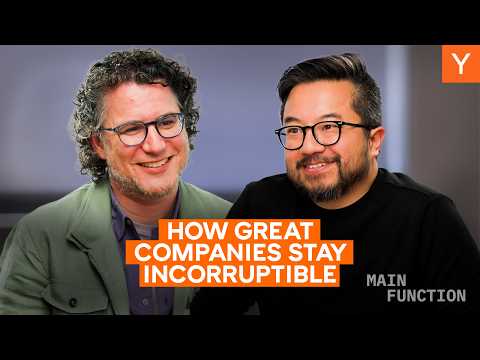
- Shareholder primacy is a social construct from the 1980s, not a timeless financial mandate.
- Mission-aligned companies like Novo Nordisk and Costco thrive because their governance structures prioritize long-term durability over short-term market peaks.
- Governance is a competitive recruiting tool; top talent seeks companies that promise to use their work for meaningful, responsible ends.
- The 'governance fortress' concept replaces dependence on human virtue with structural permanence, ensuring the company survives after the founder departs.
Channel: Y Combinator
Why Good Companies Go Bad (And How to Stop It)
This content explores why traditional corporate governance structures often lead to founder displacement and mission collapse, arguing for the adoption of mission-controlled entities to ensure long-term integrity.
Key Takeaways
- Extractive money-making through shareholder primacy is an modern, optional norm, not a law of capitalism.
- Founder control is insufficient to protect a long-term mission, as success often makes the company a lucrative target for takeover.
- Implementing structural safeguards like Public Benefit Corporations or perpetual purpose trusts creates a 'governance fortress' resilient to external pressure.
Talking Points
Analysis
Strategic Significance
This discourse challenges the foundational assumption that shareholder value is the ultimate enterprise goal. By framing governance as a choice rather than a necessity, it empowers founders to align their capital structures with their actual long-term goals.
Who Should Care
Founders and operators in high-stakes fields like AI and biotech should pay close attention, as their technologies carry externalities that general-purpose corporations are structurally unable to manage. Investors who seek sustainable long-term returns rather than quick flips will also find value in these models.
Contrarian Takeaway
The most 'robust' governance strategy is not tightening control for oneself, but surrendering power to a structure that cannot be corrupted. Often, giving up personal control to a well-designed trust or foundation is the only way to ensure the founder’s mission truly survives.
Time saved:
Channel: Y Combinator