
Tag: Entrepreneurship
The Best Entrepreneurs Do This...
The Signal
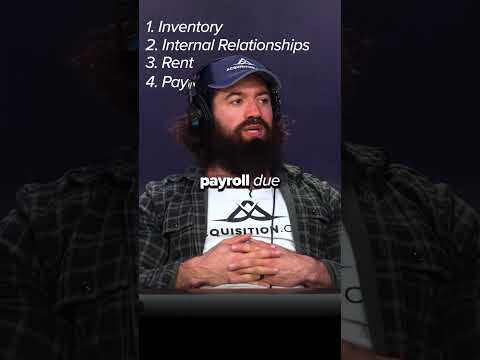
Effective entrepreneurship is framed not as product mastery, but as the rigorous allocation of scarce resources under simultaneous, competing pressures. The speaker defines strategy as the strategic curation and prioritization of opportunities, arguing that simplistic, outsider advice fails because it disregards the messy reality of managing real-time operational or personnel constraints.
The Case
- Business judgment is described as a high-pressure balancing act where managers must simultaneously handle decaying inventory, payroll, rent, marketing budgets, and interpersonal conflicts like staff harassment.
- The speaker contends that top entrepreneurs are primarily resource allocators who extract more value from the same inputs by intentionally selecting which opportunities to pursue through a process of curation and prioritization.
- Simplistic critiques from outsiders—such as telling a restaurant owner to simply improve food quality—are dismissed as "Monday morning quarterbacking" that ignores the real-world trade-offs of constrained capital and time.
- Defining strategy as the curation and prioritization of opportunities is presented as the core mechanism of success, though the speaker asserts this framework without providing empirical evidence or external validation.
- Personnel issues, such as one employee making inappropriate advances toward another, are offered as examples of the non-operational burdens that force bosses to decide between intervening or avoiding excessive authority.
The 1 Minute Signal Take
This content offers a useful cognitive model for decision-making under scarcity, shifting the focus from idealized product quality to the practical mechanics of resource distribution. While the speaker’s framework is asserted rather than proven, it correctly captures the reality of operational trade-offs and is worth watching for anyone struggling to distinguish between urgent noise and strategic opportunity.
Tags
Tag: Entrepreneurship