The state of the tech industry in 2026 - LDX3 New York

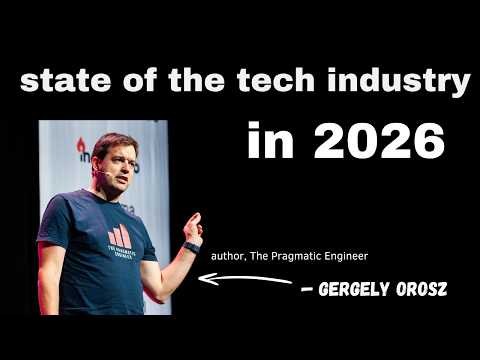
Video thumbnail: The state of the tech industry in 2026 - LDX3 New York
Oct 6, 202629m 39s video lengthThe Pragmatic Engineer

The Signal

Software engineering has shifted from manual, IDE-centric coding to orchestrating parallel AI agents. This transition is marked by a move toward internal company harnesses and a sharp rise in machine-generated pull requests. While this increases throughput, it strains traditional quality controls and org structures, creating a tension between radical automation and fundamental engineering practices.

The Case

The Workflow Shift

  • Engineering throughput is now driven by engineers running five to 10 concurrent agent sessions, abandoning the "one mouse, one screen" constraint for parallel agent coordination.1:53
  • Traditional IDEs are being relegated to legacy or enterprise roles as companies build custom internal harnesses—platforms integrating Slack, private data, and agentic workflows—to route work efficiently.4:22

Metrics and Quality

  • Platform data is stark: on Linear, agent-created tickets now outnumber human ones for the first time, while GitHub has seen a 10-fold increase in agent-generated pull requests since January.8:13
  • Traditional code review is breaking down under this volume, leading to "zombie reviews" where teams selectively bypass scrutiny for non-critical code, creating a measurable strain on software reliability.17:01

Org and Infrastructure

  • Migrations that historically took years—such as OpenAI’s Python-to-Rust API shift or Airbnb’s Enzyme-to-React transition—are now being executed in months or even weeks.6:27
  • Leadership roles are under unprecedented pressure, with high churn among managers as teams flatten; many leaders are moving to fractional roles or taking career breaks due to increased founder-mode demands and startup instability.20:03
  • Infrastructure bottlenecks have expanded beyond GPUs: CPU and memory lead times for cloud capacity have grown from weeks to as long as six months, complicating the strategy to move all development to the cloud.18:33

The 1 Minute Signal Take

The industry is moving toward an "AI-first" operating model where the primary skill for engineers is agent orchestration rather than hand-writing code. While this demands deeper domain knowledge, the persisting need for team-based ownership and manual testing highlights that AI is currently a force multiplier for, not a replacement of, rigorous engineering institutions.

Pro Analysis

Why It Matters

The transition to agent-centric workflows marks the most significant architectural shift in software engineering since th...
Full analysis always available on Pro.

Time saved:27m 52s

Share this

Tags

Written by: 1 Minute Signal Editorial Team