
- Adapting to climate change is increasingly viewed as a profitable market opportunity expected to reach $1.3 trillion.
- Seawalls and massive infrastructure can cause unintended ripple effects, including ecological damage, displacement of fishing communities, and port closures.
- The 'moral hazard' danger looms large: if society feels 'climate-proofed' by infrastructure, the political appetite for mandatory emissions cuts may vanish.
- Jakarta serves as a cautionary tale where physical flood defenses are doomed unless paired with radical reform of water usage.
Back to Feed
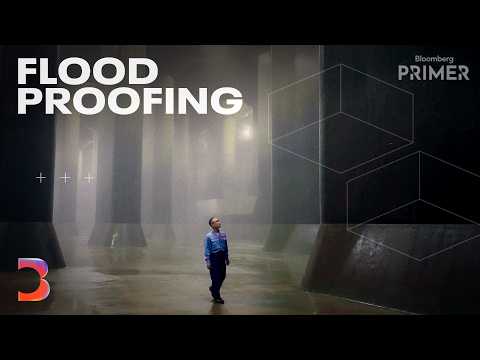
The Colossal Hidden Infrastructure Keeping Cities Dry and Growing | Bloomberg Primer
The video examines how civilizations manage water risks through infrastructure and adaptation, contrasting high-capital engineering projects against nature-based and community-led solutions. It highlights the urgent need to balance these resilience strategies with ongoing efforts to reduce global carbon emissions.
Key Takeaways
- Climate adaptation requires a nuanced mix of massive infrastructure projects like Tokyo’s flood tunnels and smaller, nature-based interventions.
- Effective adaptation creates economic value and preserves assets, but it is not a substitute for the fundamental need to lower carbon emissions.
- Projects like Jakarta’s seawalls and Nairobi’s waste-management systems demonstrate that local context, groundwater management, and community integration are as critical as technical specifications.
Talking Points
Analysis
Strategic Significance
Infrastructure projects are transitioning from simple civil works to critical geopolitical assets. Because disasters now represent a multi-hundred billion dollar annual drag on the global economy, resilience spending has become a core component of national sovereignty and economic stability.
Who Should Care
- Policy Makers: They must decide whether to commit public funds to permanent, rigid infrastructure or flexible, nature-based systems.
- Investors: Those tracking the $1.3 trillion adaptation sector should focus on firms that provide modular, scalable, and community-integrated solutions rather than just traditional heavy construction.
- Urban Planners: Professionals in high-risk regions must reconcile the immediate need for survival with the long-term reality of unmitigated climate change.
Contrarian Takeaway
The most effective 'resilience project' in a sinking city may not be a wall, but a policy banning the use of groundwater. The obsession with building high-profile barriers often masks deeper underlying failures that no amount of concrete can resolve.
Time saved:
Back to Feed