
Channel: Council on Foreign Relations
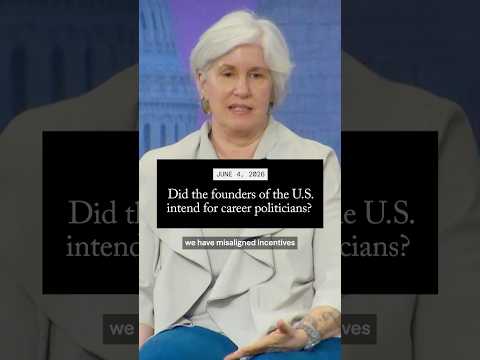
Did the founders of the U.S. intend for career politicians?
The Signal
American politics is captured by a permanent political class, according to the speaker, who argues that modern incentives sustain careerists instead of the seasonal public service intended by the founders. By framing democratic health as contingent on rotating leaders in and out of office, the speaker challenges the legitimacy of elite-credentialed governance and calls for systemic reform.
The Case
- The speaker claims elections are effectively decided by a narrow slice of "200,000 to 300,000" voters nationwide—a group characterized as the least prepared—which allegedly aligns with the incentives of incumbent career politicians.
- To dissolve this class, the speaker proposes changing public service into an episodic season of life rather than a career path, utilizing measures like three terms in Congress, two in the Senate, or 18-year terms on the Supreme Court as possible examples.
- Practical, non-elite experience is emphasized as vital; the speaker posits that a rural UPS driver who understands the intersection of water topography and gas prices holds policy-relevant expertise equal to that of graduates from institutions like the Georgetown School of Public Affairs.
- The central diagnosis that modern institutions are fundamentally misaligned rests on the assertion that founding documents were designed for rotation, though the speaker provides no evidence for this historical interpretation or the electoral influence claims.
The 1 Minute Signal Take
This video is a rhetorical argument, not a factual inquiry; it relies on vivid hypotheticals rather than data to support its diagnosis of American governance. Watch it only to understand the specific reformist narrative emerging in populist political discourse, but skip it if you are looking for evidence-based analysis of voter influence or electoral system design.
Time saved:
Tags
Channel: Council on Foreign Relations