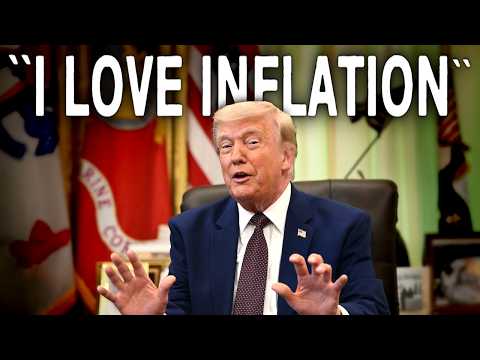
How Much Longer Can We "Hide" The Inflation?

Video thumbnail: How Much Longer Can We "Hide" The Inflation?
Jun 20, 202621m 55s video lengthHow Money Works

The Signal

Inflationary pressure is exceeding headline CPI figures because corporate inventory stockpiles and U.S. strategic oil reserves are being rapidly exhausted. The transcript asserts that these buffers, which previously shielded consumers from tariff-linked costs and energy spikes, are nearing their limits, threatening to force a broader and more painful price pass-through that may trap the Federal Reserve between rising inflation and cooling labor markets. The central dispute remains whether these price shocks are temporary distortions or the beginning of a durable, policy-forcing inflationary cycle.

The Case

  • US strategic petroleum reserves have fallen from 411 million barrels at the start of the year to approximately 349 million today, dangerously nearing the 150 million barrel floor considered necessary for cavern integrity.8:55
  • Companies added $172 billion in inventory during Q1 2025, the largest buildup since the 1940s, which allowed firms to artificially delay passing tariff costs to consumers until these stockpiles began to run dry.3:11
  • Supreme Court rulings striking down tariff batches have left the government owing an estimated $166 billion in refunds to 330,000 importers, creating a predatory secondary market where investors buy refund claims for 20 cents on the dollar, often leaving cash-strapped small businesses behind.4:54
  • Data-center buildouts are creating physical scarcity by competing for critical infrastructure, causing transformer prices to surge 4 to 6 times pre-2022 costs with wait times stretching to 4 years.13:40
  • Household spending is highly concentrated, with the top 10% of earners accounting for nearly half of all consumption and 87% of equity ownership, creating a direct feedback loop where stock market volatility risks contracting the real economy.19:02
  • The Fed is boxed in by payroll growth—which has beaten forecasts for three straight months—because this strength removes their justification to hold rates steady while energy and input costs move higher.17:22

The 1 Minute Signal Take

The transcript provides a compelling, evidence-heavy case that several critical economic buffers are reaching hard limits. While it occasionally suffers from an over-confident, causal framing regarding future Fed actions and market inevitabilities, the underlying data on inventory depletion and infrastructure bottlenecks is logically sound. Watch this video for the specific, concrete data on utility-input shortages and the financial mechanics behind the tariff-refund market, which text-based summaries often glaze over.

Pro Analysis

Strategic Significance:

  • The economy has shifted from a post-pandemic recovery phase to a structural bottleneck phase where physical inputs and policy limitations dominate growth trajectories.

Who Should Care:

  • Investors, small business operators, and policy analysts should care, as the shift from inventory-buffered pricing to direct pass-through will manifest as sudden, sharp price hikes in essential goods and services.

Contrarian Takeaway:

  • Strengthening employment data and soaring tech valuations are not indicators of a 'booming' healthy economy, but rather symptoms of a system nearing a breaking point where liquidity competition is cannibalizing essential infrastructure development.
Time saved:19m 32s

Share this

Tags