
Channel: Council on Foreign Relations
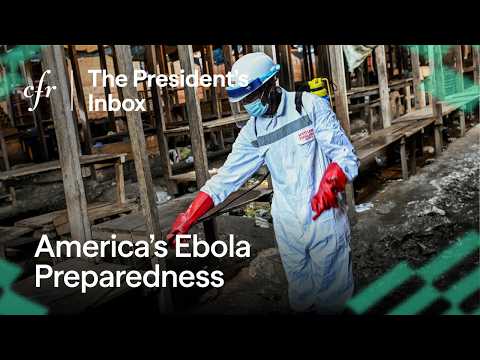
America’s Ebola Preparedness, With Thomas Bollyky | The President’s Inbox
The Signal
A severe Ebola outbreak in the Democratic Republic of Congo poses a significant humanitarian and regional challenge, though it remains a low direct threat to the U.S. While international intervention is underway, the crisis is defined by a deep operational struggle: the lack of point-of-care diagnostics for the Bundibugyo species of the virus, which led to delayed containment efforts. The central tension pits a normative desire to preserve global health surveillance networks against a domestic trend toward strategic withdrawal.
The Case
- The current outbreak likely circulated undetected for weeks or months, with the Red Cross reporting deaths consistent with Ebola as early as March, despite the WHO only confirming the first case on April 24.
- A 10-day delay by the WHO in announcing the outbreak after the DRC government's May 5 notification remains a point of contention regarding institutional agility.
- The U.S. has maintained a central role in the response with 100 CDC staff on the ground and substantial funding despite an official strategic shift against multilateral engagement.
- China has failed to emerge as the global health leader many anticipated; its $500 million pledge over five years does not offset the $600 million gap created by U.S. withdrawal, and its health assistance has remained stagnant.
- While the COVID-19 pandemic enabled the rapid development of countermeasure platforms, the primary failure in the current response is institutional and behavioral rather than a lack of scientific tools.
- The transcript distinguishes between origins, noting that while natural spillovers require different surveillance than potential lab incidents, the downstream requirements for field diagnostics and community engagement are effectively universal.
The 1 Minute Signal Take
The video offers a sober, rigorous look at how institutional inertia in global health outpaces the speed of modern biological threats. Tom Bollyky provides a clear-eyed assessment of why the U.S. remains the de facto leader in outbreak response, but his skepticism of travel restrictions feels more conventional than his analysis of diagnostic bottlenecks. Watch it if you want to understand the mechanics of outbreak funding and the stark reality of China's limited role in global health; skip it if you are already familiar with the post-COVID limitations of institutional readiness.
Time saved:
Tags
Channel: Council on Foreign Relations