U.S. Buys Into Venezuelan Oil + Why Efficiency Is the Real Path to Energy Security | The Spillover

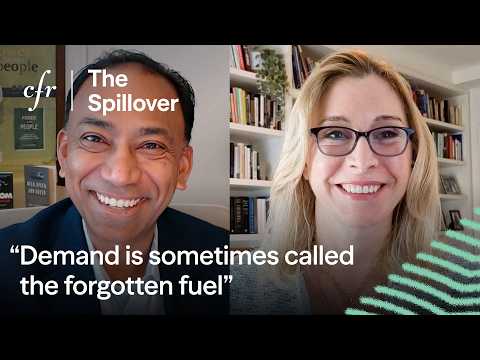
Video thumbnail: U.S. Buys Into Venezuelan Oil + Why Efficiency Is the Real Path to Energy Security | The Spillover
Sep 1, 202648m 41s video lengthCouncil on Foreign Relations

The Signal

The energy landscape is shifting from a sole focus on top-down supply expansion toward a critical, underutilized lever: bottom-up demand flexibility. While geopolitical shocks like the Iran war and Venezuelan oil uncertainty dominate headlines, the real strategic transition is driven by intelligent demand management, electrification, and distributed technology that decouples growth from energy consumption.

The Case

Geopolitics and Supply Risks

  • The recent U.S. move to secure a stake in Venezuela’s oil reserves is less a geological breakthrough and more a high-risk gamble, likely requiring Pentagon-backed sovereign cover to attract private investment into a region plagued by expropriation and heavy, costly crude extraction.7:20
  • The ongoing Iran war represents the largest supply disruption in market history, yet global growth has held steady at 3% due to strategic demand reduction by China and market resilience; however, the near-term risk remains high as a fifth of global tradable LNG stays trapped behind the Strait of Hormuz.6:10

The Demand-Side Thesis

  • Energy grids are often underutilized, with peak stress occurring for only 20 to 40 hours per year, suggesting that visibility and software control—rather than just new drilling—can unlock massive latent capacity.19:38
  • Data centers are being reframed from pure load-growth liabilities to flexible assets; a Duke study indicates that just 20 hours of operational flexibility per year can materially reduce system stress, a model already reflected in new Google contracts.34:22
  • Emerging markets like India are successfully leapfrogging traditional fossil-heavy industrialization by using auction-based policies and Chinese-manufactured clean tech to rapidly scale solar and battery integration, with 150 gigawatts of solar already installed.29:31
  • Distributed energy adoption is surging bottom-up, evidenced by informal mass-deployment of balcony solar in Pakistan and the rise of virtual power plants that aggregate small-scale storage and generation to rival utility-scale performance.33:20

The 1 Minute Signal Take

The conflict between top-down supply politics and bottom-up efficiency is the primary tension in global energy. Success will be determined less by who controls the next barrel of oil and more by which economies can modernize their grids to treat demand as a flexible, intelligent asset.

Pro Analysis

The Shift to Energy Orchestration

This content marks a critical pivot in energy discourse: the transition from 'energy as a commodity' t...
Full analysis always available on Pro.

Time saved:46m 48s

Share this

Tags

Written by: 1 Minute Signal Editorial Team