
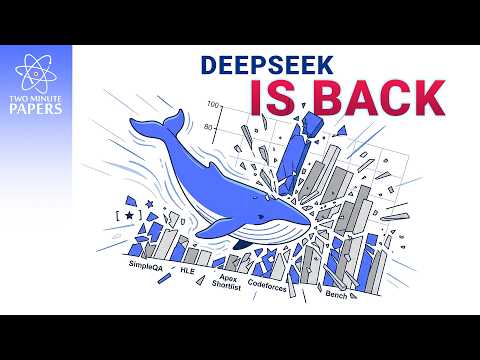
- The model achieves an approximate 90% reduction in KV-cache memory usage through three combined layers of hierarchical data compression.
- Efficiency gains are substantial, with the Pro and Flash versions requiring significantly less compute resources than current industry standards.
- It leverages the Engram technique, which allows the model to recall specific internal facts directly rather than recalculating them from scratch.
- The model is limited to text, highlighting that architectural breakthrough in token-processing does not equate to broader multimodal capability.
Back to Feed
DeepSeek V4 AI Beats Billion Dollar Systems…For Free
This video details the technical architecture and efficiency breakthroughs of the DeepSeek 4 AI model, focusing on how its novel compression techniques enable massive context windows and lower compute costs.
Key Takeaways
- DeepSeek 4 utilizes three distinct layers of KV-cache compression to drastically reduce memory overhead while maintaining high performance on long context tasks.
- The architecture introduces significant efficiency gains, requiring substantially less compute power than previous iterations and leading frontier proprietary models.
- Despite its performance, the model is strictly unimodal, lacking support for audio or image inputs, and exhibits recall degradation near its maximum context limits.
Talking Points
Analysis
Strategic Significance: DeepSeek 4 demonstrates that performance parity with frontier models is attainable through extreme archite...
Full analysis available on Pro.
Time saved:
Back to Feed