
Strategic Implications
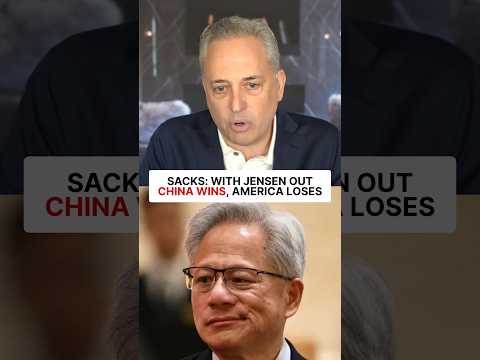
The content frames corporate leadership as a national security asset. By linking Nvidia’s ability to release annual performance leaps to U.S. competitiveness, the speaker elevates the firm from a commercial entity to a geopolitical lynchpin. This suggests that the 'Nvidia moat' is fragile—held together by a singular vision rather than a defensible, automated process.
Evidence & Hype Audit
This content is high-narrative but low-evidence. It relies heavily on founder-centric storytelling (the 'Great Man' theory) and lacks technical documentation or market data. The argument is essentially a forecast based on the speaker's assessment of leadership importance. While the logic is internally consistent—faster innovation equals a wider gap—the assertions regarding Huawei’s ability to 'catch up' remain purely speculative.
Contrarian Viewpoint
An alternative perspective is that Nvidia’s momentum is now driven by a massive, highly optimized institutional flywheel—a workforce, supply chain, and software ecosystem (CUDA)—that is larger than any one person. If this is true, the claim that Nvidia would 'lose a tempo' upon a leadership change may be hyperbolic, discounting the depth of the organizational talent stack.
Role-Specific Takeaways
- Investors: Monitor leadership continuity and succession planning as a critical risk factor for semiconductor firms.
- Policy Analysts: Focus on the 'velocity of innovation' rather than static export controls when evaluating China's technological trajectory.
- Industry Leaders: Treat organizational speed as a measurable competitive metric, comparable to market share.
What to do next
- Analyze Nvidia’s organizational structure to assess how much innovation is dependent on specific individuals versus teams.
- Review Huawei's recent patent and R&D output to see if they are actually closing the gap.
- Investigate whether other semiconductor giants like TSMC or AMD exhibit similar 'founder-dependent' innovation patterns.
- Conduct a sensitivity analysis on how a 12-month delay in product cycles impacts market share in AI infrastructure.