
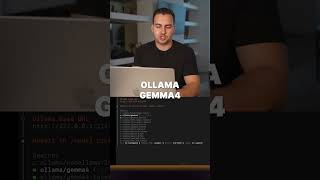

- Selecting 'local only' deployment eliminates external dependencies and improves data security.
- Terminal-based configuration allows for granular model selection including specialized variants like Llama Gemma 4.
- Gateway lifecycle management is essential for model state updates within the OpenClaw runtime engine.
Back to Feed
Source Video
Configuring Local LLMs for OpenClaw Workflow Integration
This guide demonstrates the process of integrating and activating local large language models within the OpenClaw framework for private, offline AI inferencing.
Key Takeaways
- Simplifies local model deployment by bypassing cloud infrastructure for data privacy and latency optimization.
- Uses a terminal-based configuration flow to enable specific Llama model versions for immediate local execution.
- Requires a manual gateway restart to refresh model availability within the OpenClaw environment.
Talking Points
Analysis
Strategic Importance
This content serves developers who prioritize data sovereignty and local infrastructure control over cloud-vendor reliance. Reducing dependency on external APIs mitigates risks related to rate limiting, cost volatility, and data privacy breaches.
Who Should Care
Backend engineers and AI infrastructure architects who manage sovereign, on-premises, or air-gapped LLM deployments.
Contrarian Takeaway
While 'local-only' configurations are marketed for privacy, their true competitive edge in 2026 is actually the elimination of network-induced latency in complex, high-throughput agentic workflows.
Time saved:
Back to Feed