
Why It Matters
This update signals a tactical pivot in the AI arms race: companies are moving beyond simple text generation to integrated 'artifact' creation. The ability to move seamlessly from a conversation to a functional spreadsheet or app is a clear move toward becoming the default interface for work, directly encroaching on the Microsoft 365 ecosystem.
Strategic Implications
Anthropic is betting that if they can capture the 'first 15 minutes' of a user's task, they become the indispensable layer of the modern digital workspace. However, the 'fidelity gap'—the loss of formatting and advanced features—indicates that while the AI understands data, it does not yet understand the complex, legacy-dependent metadata that constitutes business-critical work.
Evidence & Hype Audit
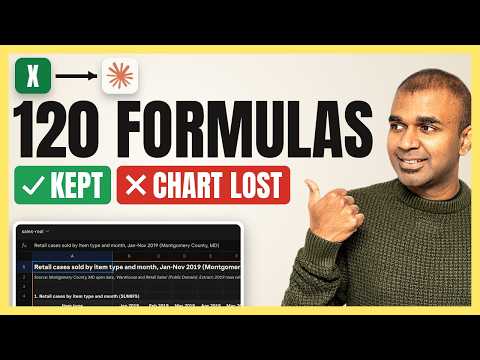
This content is highly grounded in practical, observational evidence. By conducting a 'one-run' test and explicitly disclosing failures (like the 22-minute 'Max' mode stall), the speaker provides a sober look at current limitations rather than marketing-grade hype. The data on usage-point consumption provides a clear, quantitative basis for the inefficiency claims.
Counterarguments
One could argue that the 'fidelity loss' is merely a software versioning issue that will be solved in months. If Anthropic continues to refine the import-export pipeline, the primary competitive advantage of Excel—its robust, predictable rendering—may evaporate, leaving Claude with a superior, conversational UX advantage.
Who Should Care
- Finance Professionals: Need to stick to Excel for final reporting but can leverage Claude for rapid data exploration.
- Product Managers: Should view Whiteboard and Abacus tools as powerful, disposable prototyping engines.
- Developers: Must recognize that 'Max' settings are not silver bullets and should optimize prompt effort to manage credit/compute costs.