Who’s Afraid of Chinese Models? | Stratechery by Ben Thompson

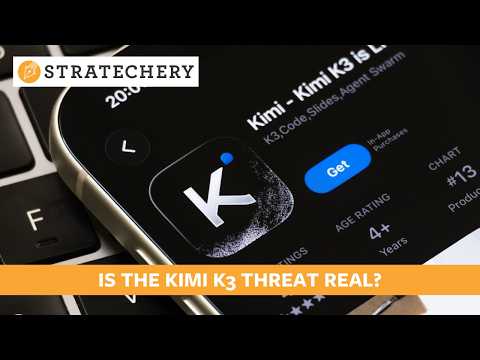
Video thumbnail: Who’s Afraid of Chinese Models? | Stratechery by Ben Thompson
Jul 29, 202620m 25s video lengthStratechery

The Signal

AI economics are shifting from exclusive reliance on training costs to a renewed focus on marginal serving costs and inference efficiency. While frontier labs charge high prices due to current compute supply constraints, the true economic threat from Chinese models arises from structural advantages in distillation and their deployment flexibility in industrial applications, rather than inherent cost superiority.

The Case

Economics and Competition

  • AI inference is not a zero-marginal-cost good; serving costs scale linearly with usage, meaning open-weight models reduce R&D barriers but do not eliminate recurring COGS.2:10
  • Current frontier pricing serves as a price umbrella maintained by compute scarcity; Chinese models like Moonshot AI's K3—priced at $3 per million input tokens versus $5 for Western equivalents—may appear cheaper only because they capture market share while frontier labs remain supply-constrained.9:20
  • Frontier labs fear Chinese models because they lack control over the data feedback loop generated by open-weight deployment and face competition as these models integrate into end-user software stacks.10:22

Distillation and Geopolitics

  • Chinese labs gain a recurring structural advantage through distillation, as they can leverage Western frontier outputs as teachers to iterate faster while U.S. open-source builders are restricted by proprietary terms of service.14:27
  • The strategy aligns with an industrial pivot; Xi Jinping’s recent directive framing AI as moving from the digital to the physical world suggests a focus on commoditizing intelligence to integrate it into China’s manufacturing and robotics strengths.13:04

Cybersecurity as a Critical Dependency

  • The necessity of local model access is best illustrated by the recent breach at Hugging Face—a New York-based developer platform with $100M ARR—where security teams were forced to use China’s Z.AI GLM 5.2 model to analyze over 17,000 logs because U.S. frontier guardrails blocked incident response tools.17:50
  • The speaker advocates for U.S. legislative reform to establish training-data usage as fair use and prohibit anti-distillation terms of service, arguing that barring defenders from high-capability models effectively abdicates cybersecurity to state-backed Chinese tools.17:11

The 1 Minute Signal Take

The competitive edge in AI is shifting from aggregate model training to operational inference efficiency and data-loop integration. Policymakers face a trade-off where current fears of distillation may inadvertently damage U.S. security by forcing defenders to rely on Chinese models because domestic options remain locked behind restrictive guardrails.

Pro Analysis

Why It Matters

This analysis forces a transition from 'AI as a magical black box' to 'AI as an industrial commodity.' Understanding that...
Full analysis always available on Pro.

Time saved:18m 22s

Share this

Tags

Written by: 1 Minute Signal Editorial Team