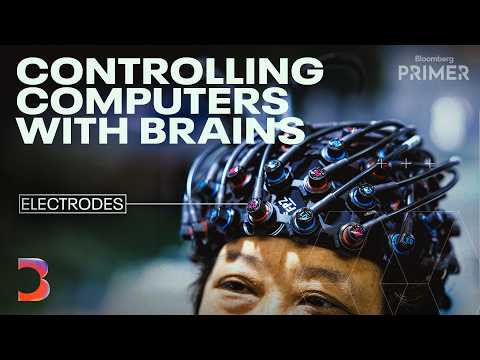
Inside a Brain-Chip Startup in China | Bloomberg Primer
Jun 8, 202612m 16s video lengthBloomberg Originals
The Signal
Brain-computer interface (BCI) technology is moving from experimental research into clinical reality, as evidenced by startups like the Shanghai-based NeuroXess. While the US currently leads in private funding, China is aggressively forcing a commercial path through state-directed industrial policy. The central tension pits the immediate medical benefits for patients like Mr. Zhang—who uses an implant to control his wheelchair—against mounting fears regarding long-term neural privacy, potential military misuse, and unresolved commercial viability.
The Case
Mr. Zhang, a patient paralyzed for over eight years, has used a NeuroXess BCI since October 2025 to control a wheelchair and train on a robotic exoskeleton, serving as the primary human example of current clinical efficacy.0:36
China has designated BCI as one of six strategic industries in its 15th five-year plan, backed by a $165 million brain science fund, which firms use to combat the funding disparity where US companies have collectively raised $2.75 billion.8:25
NeuroXess, which has tested its technology on over 50 patients, opted for a thin-strip electrode design specifically to reduce the risk of scar tissue accumulation and signal degradation inherent in intracranial implants.7:41
Although China approved its first invasive BCI for commercial use in March 2026, the industry faces an unresolved commercial bottleneck regarding who will pay for the devices and how insurance coverage will work.9:22
Experts warn that broader deployment raises legitimate fears of coercive consciousness alteration or military misuse, noting historical precedents like Cold War-era CIA behavior and current DARPA-funded research into hands-free drone control.10:39
The industry claim that NeuroXess devices could last three years remains a self-reported company projection, as current patients—including Mr. Zhang—are only committed to one-year safety and effectiveness trials.7:09
The 1 Minute Signal Take
This video provides an excellent survey of the BCI landscape because it balances the genuine medical progress being made today with the stark realities of regulatory and financial hurdles that haven't yet been cleared. It is worth watching for the interview with the technical lead and the specifics on the Chinese policy mechanism, which are much clearer here than in typical tech-sector reporting.
Pro Analysis
Strategic Significance:
The transition of BCI from speculative research to a state-prioritized industrial sector signals that neural data ...