
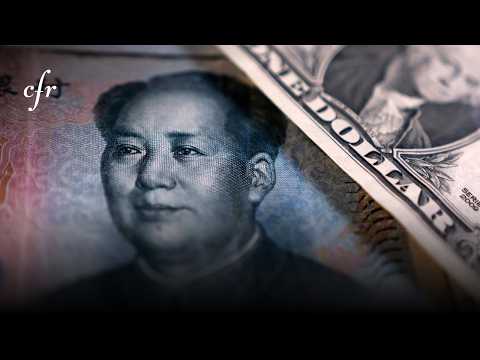
Why it Matters
This content shifts the discourse from a binary 'dollar vs. yuan' conflict to a nuanced reality of 'systemic entrenchment.' It exposes that China’s financial strategy is fundamentally defensive; it is not trying to overturn the global order but rather to survive within it during a potential conflict.
Strategic Implications
The U.S. holds a massive structural advantage due to the depth and openness of its markets, which China cannot easily replicate without sacrificing domestic control. However, by over-relying on sanctions as a primary geopolitical tool, the U.S. is inadvertently accelerating the construction of a parallel, harder-to-monitor financial infrastructure.
Evidence & Hype Audit
The content is highly credible, relying on expert consensus rather than speculative hype. It correctly dismisses the 'petro-yuan' and 'immediate collapse' narratives, grounding the argument in structural barriers like capital controls and lack of convertibility.
Counterarguments
A contrarian view might argue that China’s 'insurance' will eventually become 'preferred infrastructure' if the U.S. continues to weaponize the dollar for peripheral geopolitical goals. Over time, the mere availability of these alternatives might lower the 'switching cost' for neutral nations to abandon the dollar.
Who Should Care
- Portfolio Managers: To understand the long-term risks of 'dark' financial channels impacting currency stability.
- National Security Analysts: To evaluate the 'sanction-escalation ladder' in a Taiwan contingency.
- Fintech Strategists: To monitor the shift toward tokenized deposits as the next global payment standard.
What to do next
- Audit exposure to non-standard, nested correspondent banking channels.
- Monitor the growth of CIPS participant numbers as a proxy for regional financial alignment.
- Track the development of tokenized deposit standards in both U.S. and Chinese banking sectors.
- Assess the liquidity of newly added spot pairs at the Shanghai Clearing Corp.
- Develop internal 'worst-case' financial contingency plans for a regional conflict in East Asia.