CFR 9/9 Global Affairs Expert Webinar: China’s Influence in the Americas

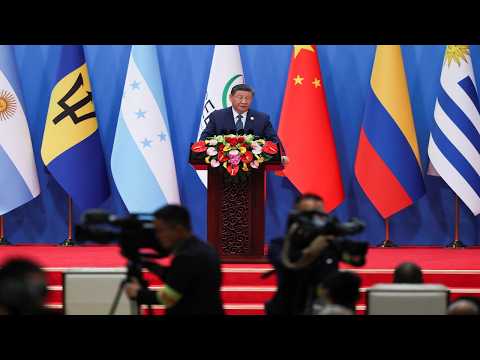
Video thumbnail: CFR 9/9 Global Affairs Expert Webinar: China’s Influence in the Americas
Sep 10, 20261h 4m 26s video lengthCouncil on Foreign Relations

The Signal

China’s strategy in Latin America has shifted from massive infrastructure lending to trade-heavy, sector-targeted industrial expansion. While the U.S. employs a narrow, security-focused containment approach, the central tension remains whether documented cases of regulatory pressure and corruption reflect systemic institutional erosion or mere correlation with pre-existing governance flaws.

The Case

The Shift in Engagement

  • China is moving beyond the "peak BRI" era of giant infrastructure loans, focusing now on trade and smaller, high-value projects that prioritize batteries, EVs, solar, pharmaceuticals, and biotech.0:00
  • Margaret Myers, an expert on China-Latin America relations at the Inter-American Dialogue, notes this evolution reflects China’s domestic industrial planning, where domestic market saturation creates a need to export high-tech goods.
  • This engagement creates structural leverage; when countries rely on China for up to 90% of commodity exports, they are increasingly forced to align their policy decisions with Chinese commercial interests.

Institutional Risks and Research

  • Julio Guzmán, a professor at the University of Maryland and former Peruvian presidential candidate, points to 80 documented cases of regulatory interference and 50 corruption cases across 12 countries as evidence of institutional risk.
  • A study of 100 contracts between China and developing nations, including 27 in Latin America, found frequent clauses that prohibit public disclosure and allow for policy-change conditionalities.
  • Guzmán argues these patterns threaten state capacity and rule of law, though he explicitly acknowledges that a definitive causal link between Chinese investment and institutional decline remains unproven.

Strategic Competition

  • The U.S. response remains selective and reactive, focusing strictly on "red lines" like telecommunications, space cooperation, and surveillance-related infrastructure rather than offering a broad regional economic counterstrategy.
  • While China seeks to diminish U.S. regional influence, experts suggest the strategy is less about direct displacement and more about shaping an operating environment that prioritizes Chinese commercial resilience.

The 1 Minute Signal Take

Chinese influence is no longer defined by simple loan-based diplomacy, but by deep industrial integration that pressures local governance and market competitiveness. Whether this trend erodes institutional integrity is the primary open question; evidence shows clear correlation, but conclusive proof of causation is still being tested by ongoing econometric research.

Pro Analysis

Why it Matters

China’s influence in Latin America has transcended simple lending; it is now architecturally integrated into the region's...
Full analysis always available on Pro.

Time saved:1h 2m 30s

Share this

Tags

Written by: 1 Minute Signal Editorial Team