
Analytical Overview
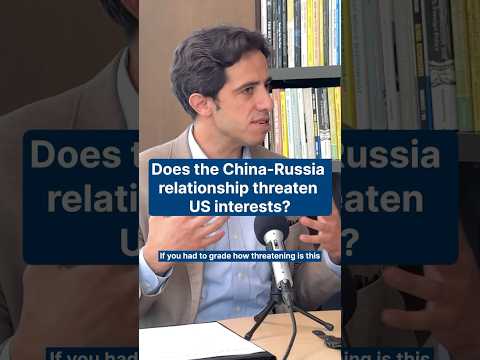
The core assertion of the experts is that the China-Russia relationship has shifted from a peripheral consideration to a central, disruptive reality in global security. By moving beyond traditional bilateral diplomacy into a more cohesive, anti-establishment posture, they pose a multi-domain challenge to the U.S. that does not fit neatly into historical categories like 'allied' or 'non-aligned.'
Strategic Implications
The primary hazard for the U.S. is the 'asymmetry trap'—assuming that because these two powers harbor mutual suspicions, their cooperation is inherently ephemeral. If policymakers treat the partnership only as a fragile set of short-term goals, they risk failing to counter the long-term, structural threat posed by their combined efforts to dilute U.S. influence in international institutions.
Evidence & Hype Audit
This content is high-quality expert commentary but remains speculative in its threat-scoring (7–8/10). The speakers function more as observers of geopolitical trends than as analysts presenting empirical data or declassified intelligence. The 'hype' factor is low; the tone is sober, clinical, and cautionary, grounded in realistic power dynamics.
Contrarian Considerations
One could argue that the inherent mistrust mentioned—the 'asymmetry'—serves as a natural, self-correcting ceiling on their cooperation. If internal competition for regional dominance or economic influence persists, their ability to mount a unified front against the U.S. may prove less effective than the high threat scores suggest.
Strategic Takeaways by Role
- Policymakers: Re-examine assumptions regarding whether the U.S.-led order remains sufficiently resilient to withstand a persistent, two-front strategic challenge.
- Business Leaders: Expect increased geopolitical volatility in supply chains and regional partnerships as Beijing and Moscow push to reshape the international environment.
Next Steps
- Audit existing containment strategies to see if they account for dual-power coordination.
- Identify specific domains where the China-Russia alignment causes immediate friction for U.S. interests.
- Clarify policy objectives concerning the nature of the threat versus the probability of an formal alliance.
- Formalize a contingency response for simultaneous, multi-front pressure from both powers.
- Engage regional allies to measure their vulnerability to this shift in the international order.