
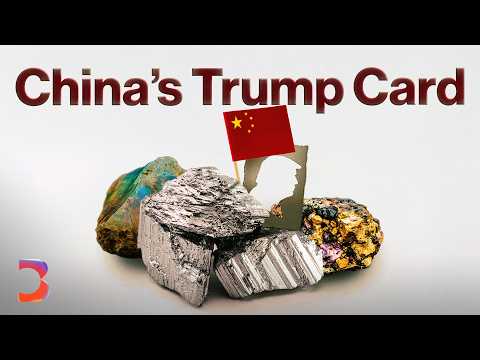
- Rare earth magnets offer essential heat resistance and power-to-weight ratios that current alternatives cannot replicate for critical weapon and motor systems.
- The bottleneck is not geological scarcity, but the hazardous chemistry of refining and the specialized expertise required for complex magnet production.
- Defense replenishment is a massive driver of current urgency, as advanced munition stockpiles were significantly drained during recent regional conflicts.
- Achieving a 50/50 sourcing split between China and other nations by 2030 is viewed as a more realistic success metric than total decoupling.
Channel: Bloomberg Originals
The $10 Billion Hunt for the Rocks That Power the World
This content explores the strategic dependence of Western technology and defense sectors on China's near-monopoly of the rare earth elements supply chain. It examines the geopolitical risks, potential for supply diversification, and the immense industrial effort required to break this bottleneck.
Key Takeaways
- China maintains a critical chokepoint over the global high-tech economy by controlling over 90% of rare earth refining and magnet production.
- Exposure to these supply chains directly threatens Western defense capabilities and automotive manufacturing, as demonstrated by previous geopolitical leverage and recent trade war escalations.
- Establishing a non-China rare earth supply chain is a slow, capital-intensive endeavor requiring vast industrial competence, environmental management, and long-term government financial support.
Talking Points
Analysis
Strategic Significance
Rare earth elements represent a fundamental industrial vulnerability. Because they are baked into the core of both consumer technology and national defense, a supply chain interruption is not merely a profit concern for corporations; it is a critical national security risk that can degrade force readiness.
Who Should Care
- Defense Contractors: The volatility of heavy rare earth supply directly impacts the availability of advanced weapon systems.
- Automotive and Green Tech OEMs: These industries are structurally dependent on permanent magnets and lack simple substitutes, making them the primary victims of trade-related export bans.
- Policymakers: Anyone focused on economic resilience must recognize that China’s advantage is based on cumulative industrial competence rather than just natural resources.
Contrarian Takeaway
Don't fixate solely on mining rights or new deposits. The true strategic value isn't in the ore—it's in the toxic, chemistry-rich process of refining and manufacturing. Building a mine in the US is theater; building the chemical infrastructure to refine the output is the only way to actually reduce risk.
Time saved:
Channel: Bloomberg Originals