
Strategic Implications
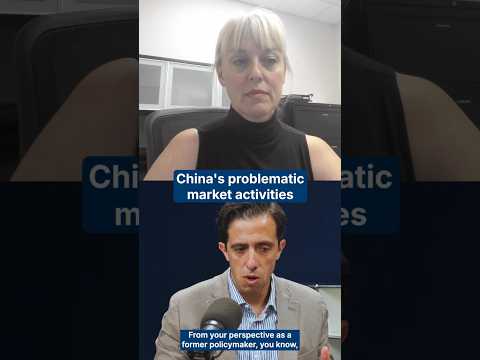
The core conflict presented is the incompatibility between state-led capitalism and liberal market institutions. If a nation can systematically remove the 'risk' of competition for its domestic industries, it gains an asymmetric advantage that standard trade agreements were not designed to counter. This suggests a move toward more defensive industrial policies among Western nations, likely involving stricter scrutiny of foreign investments and subsidies.
Evidence & Hype Audit
This content is a high-level policy synthesis rather than a technical report. It suffers from a lack of concrete data or specific case studies to substantiate the 'massive support' claims. It is essentially an expert's framing of the problem rather than an empirical demonstration. It should be treated as a strategic viewpoint rather than a confirmed economic thesis.
Counterarguments
A contrarian perspective would argue that all major economies, including the U.S., utilize various forms of industrial policy and state support (e.g., green tech subsidies, tax incentives). The claim of 'broken' market signals could be interpreted as a competitive disadvantage for foreign firms that are simply failing to adapt to a new, more efficient, and state-backed global manufacturing paradigm.
Takeaways by Role
- Investors: Monitor policy shifts that could lead to sudden regulatory crackdowns or protective tariffs in sectors identified as state-backed.
- Policy Analysts: Focus on developing clear criteria to distinguish between 'market-based' innovation and state-distorted production.
- Corporate Strategists: Assume that market share in China-heavy sectors may be subject to non-market forces that ignore supply/demand signals.
Next Steps
- Identify which specific industries are most heavily insulated by state capital.
- Map the correlation between state-directed industrial policy and global market share in those sectors.
- Determine which non-market mechanisms (e.g., credit access, land grants) provide the most significant competitive advantage.
- Evaluate the feasibility of creating new international frameworks that force transparency regarding state-led economic support.