
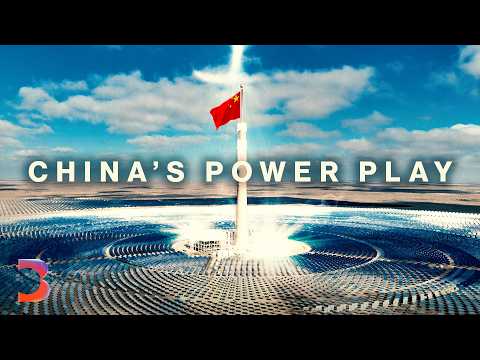
The Shift from Capacity to Connectivity
- Why It Matters: The narrative of the energy transition is shifting globally from 'how to build enough generation' to 'how to build a functioning system.' China’s experience is the ultimate high-stakes stress test for this transition. If a centralized, state-directed system cannot force its way into a renewable-first grid, it suggests that the challenges of dispatch and market design are the true final bosses of the net-zero era.
Strategic Implications
-
Strategic Implications: China is betting that electricity will be the 'new oil.' By attempting to force down the price of clean electricity through sheer volume, they are creating a competitive advantage for any industry that is electricity-intensive. If they succeed in unifying their grid by 2030, they will effectively lower the operating costs for their domestic AI and advanced manufacturing sectors, potentially widening the gap with other economies still struggling with aging grids and fragmented energy markets.
-
Evidence & Hype Audit: The content is high-quality but remains aspirational. It accurately documents the technical bottlenecks (curtailment, provincial silos, contract lock-in) while correctly framing the government's 2030 target as a policy ambition rather than a guaranteed outcome. The 'France-sized waste' claim is a useful, albeit estimated, anchor for scale, but it lacks the specific methodology to be treated as absolute hard data.
-
Counterarguments: A contrarian view might argue that China’s 'inefficiency' is a feature, not a bug. By over-building power capacity, they are creating a massive buffer for future industrial growth that may appear wasteful today but will look like foresight in a decade. The 'waste' might be viewed as the necessary cost of scaling up a system that is fundamentally different from a slow-moving, market-rate European grid.
-
Who Should Care:
- Industrial Policy Strategists: The case study demonstrates that industrial automation (robotics/AI) is directly tied to national power-market design.
- Global Energy Investors: The bottleneck in China is not supply but 'system integration'—this is where future capital and innovation will be directed.
What to Do Next
- Monitor Dispatch Reform: Track if China successfully moves coal from a 'backbone' status to a 'peaking' (backup) role.
- Observe Provincial Integration: Look for data on cross-regional electricity trade volumes between 2026 and 2030.
- Evaluate Automation Growth: Assess whether electricity-intensive industries in China actually scale as quickly as the government projections suggest.
- Benchmark Policy Targets: Treat the 2030 unified market deadline as a key KPI for the efficacy of Beijing’s energy reforms.