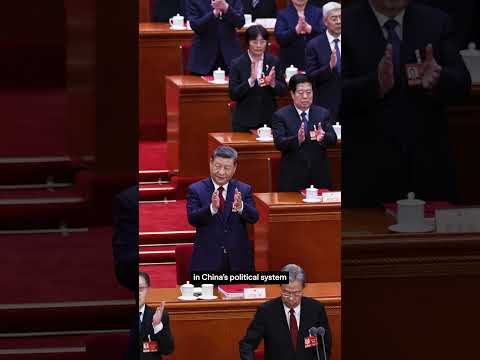
China is intervening to prevent AI-related job loss. The U.S. will be messier.

Video thumbnail: China is intervening to prevent AI-related job loss. The U.S. will be messier.
Jun 24, 20261m 29s video lengthCouncil on Foreign Relations

The Signal

China is aggressively reshaping its higher education system to serve as a workforce-allocation tool, abruptly shuttering over 12,000 undergraduate degrees while launching 10,000 new programs in just four years. As artificial intelligence disrupts traditional labor, this suggests a central-planning model intended to preemptively align domestic education with future job demand. Whether this state-directed maneuvering will successfully prevent labor shortages or backfire remains an open, contested question.

The Case

  • Universities across China have systematically replaced nearly 30% of their degree offerings over the last four years, a state-directed initiative to kill programs in oversupplied sectors while creating others where the government identifies labor shortages.0:00
  • The speaker frames the rise of artificial intelligence as a dual challenge, arguing that policymakers must look beyond macro-inflationary metrics to address the harder problem of structural labor-force displacement.0:36
  • While the speaker credits China’s political system with the administrative speed to execute these shifts, they explicitly note uncertainty regarding the long-term effectiveness of such high-stakes social engineering.
  • The one-child policy is invoked as a sobering historical precedent for large-scale central planning that initially appeared essential but ultimately resulted in profound, unforeseen consequences.
  • The U.S. is portrayed as institutionally ill-equipped to replicate this model, with the speaker predicting that any attempt at similar top-down labor steering in America would be significantly messier.1:22

The 1 Minute Signal Take

The evidentiary core—the quantified scale of mass program closures and additions—is a striking data point on how China is treating its education system as a variable of state economic capacity. Whether this model actually yields a more resilient workforce or creates a rigid, misaligned labor market depends entirely on the accuracy of the government's forecasts, an area where the speaker rightly remains skeptical. Watch the video to catch the speaker's nuance on the interplay between AI disruption and institutional friction, though the summary covers the essential quantitative findings.

Pro Analysis

Strategic Significance:

  • This represents a shift from education as an individual pursuit to education as a state-managed workforce supply chain. It acknowledges that in an era of rapid technological disruption, the lag between academic training and market demand is a systemic risk.

Who Should Care:

  • Policymakers and higher education administrators should care because this model challenges the autonomy of the university system globally. Investors and strategists should care because it provides a macro-view of how a major economy intends to maintain employment stability during an AI transition.

Contrarian Takeaway:

  • The most efficient labor planning system is not necessarily the most successful one; the very centralization that allows China to move quickly also removes the corrective feedback loops found in more chaotic, decentralized markets, increasing the probability of large-scale systemic errors.

Share this

Tags

Written by: 1 Minute Signal Editorial Team