
Why It Matters
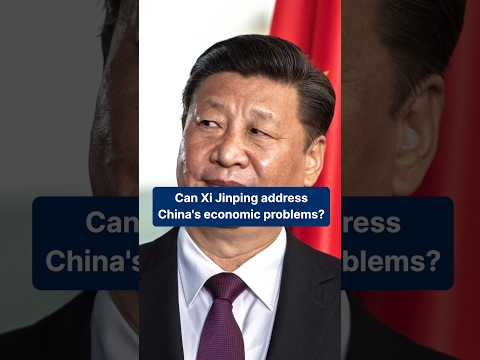
The video shifts the focus of China’s economic woes from abstract market mechanics to the personal trajectory of Xi Jinping. It suggests that China’s path is locked by a leader who values ideological consistency and resistance to Western influence over pragmatic market stabilization, making political foresight just as important as macroeconomic data.
Strategic Implications
For global firms and investors, this implies that economic normalization should not be expected under the current administration. Companies must prepare for a decoupling of domestic Chinese market incentives from international market standards. Defensive trade policies in the West, while necessary for domestic labor protection, must be calibrated with the awareness that they provide the very ammunition Beijing needs to justify its internal economic stance.
Evidence & Hype Audit
The content leans heavily on interpretative forecasting rather than hard evidence. The speaker explicitly acknowledges that public opinion is "fraught" and admits that their reading of Xi’s motives and economic knowledge is anecdotal. It is a high-confidence narrative built on low-confidence underlying data.
Counterarguments
One could argue that the Chinese regime is not "ill-informed" but is instead intentionally managing a painful transition away from an export-led growth model toward self-sufficiency. In this view, what observers call "economic mismanagement" might be a calculated, if brutal, strategy to survive a long-term geopolitical conflict with the West.
Who Should Care
- Investors/Entrepreneurs: Need to factor in high political risk when holding capital inside China.
- Policy Makers: Should scrutinize the unintended narrative consequences of protectionist legislation.
- Geopolitical Strategists: Must treat leadership succession as the single most critical indicator of future policy shifts.
What to Do Next
- Conduct a sensitivity analysis on your China exposure based on a 'no change in leadership' scenario.
- Track high-level political signals from Beijing rather than focusing solely on quarterly economic reports.
- Develop communication strategies that mitigate the risk of being labeled a participant in 'containment' narratives.
- Diversify supply chain dependencies to prepare for prolonged diplomatic deterioration.