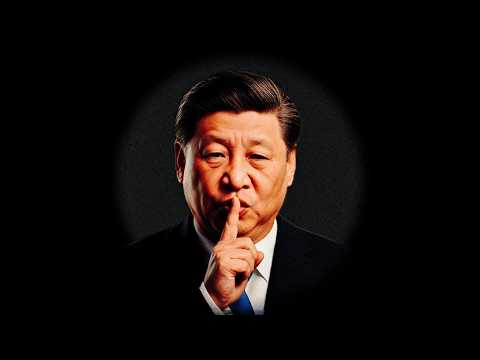
China quietly saved the world last month

Video thumbnail: China quietly saved the world last month
Jul 17, 202631m 3s video lengthMax Fisher

The Signal

As the Iran war closed the Strait of Hormuz and removed 20 million barrels of oil per day from global supply, China’s simultaneous decision to slash its own imports by roughly half neutralized a catastrophic global shortfall. This move appears to have both stabilized the world economy and significantly boosted China’s strategic autonomy. While the result is settled, why Beijing acted in secret remains a subject of intense debate among analysts.

The Case

Crisis Mechanics

  • The closure of the Strait of Hormuz created a 20-million-barrel-per-day deficit that neither reserve releases by 32 nations—averaging 2.5 million barrels per day—nor alternate pipelines could bridge.3:22
  • Global markets faced an immediate shortfall that threatened to cripple power grids, flight networks, and manufacturing until China's demand suddenly dropped by about 5.5 million barrels per day.6:35

China’s Hidden Pivot

  • China secretly banned all fuel exports from its refiners in March and suppressed domestic demand by pivoting toward record coal consumption, expanded rail usage, and rapid EV adoption.10:41
  • Beijing likely utilized a 'dark fleet' of tankers to acquire discounted, sanctioned oil from Iran and Russia, settling these trades in yuan to bypass US-controlled financial systems.16:52
  • Satellite analysis of visible silo activity suggests China holds roughly 1.4 billion barrels in reserves, giving it a strategic buffer potentially lasting over a year—a duration far exceeding the 60-day US reserve capacity.13:55

Competing Motives

  • While the stabilization is factual, analysts are divided on whether Beijing’s primary driver was preparing for a Taiwan-related blockade, exercising leverage over US leadership, shielding its own export-driven economy, or signaling its emergence as a primary global oil power.20:14
  • The transcript notes that the 'softest' theory—leverage over Donald Trump—remains unproven, while the strategic goal of neutralizing the 'Malacca dilemma' (vulnerability to naval chokepoints) aligns with China's long-term defense planning.21:59

The 1 Minute Signal Take

China has demonstrated a structural ability to influence 5% of global oil demand, effectively shifting the balance of energy power away from traditional Western-aligned channels. Whether this was a calculated 'win' or an incidental stabilization of its own interests, the event proves that China can now weather energy-based coercion in a way the US or Europe cannot.

Pro Analysis

Why It Matters

The collapse of a unified oil market during the Iran conflict demonstrates that the post-WWII energy architecture—guaranteed by US naval power and dollar hegemony—is failing. China’s pivot suggests the emergence of a multi-polar energy market where individual state resilience can override broader systemic fragility.

Strategic Implications

China has moved from being a participant in the global oil market to an active market-maker. By demonstrating the scale of its reserves and its ability to switch demand, Beijing now holds a veto over global energy stability. This reduces the efficacy of Western 'tit-for-tat' sanctions and military pressure as primary leverage tools.

Evidence & Hype Audit

The content relies on intelligence gathered from satellite observations (silo counting) and industrial reporting, which is inherently speculative but logically consistent. While the 'saved the world' framing is hyperbolic, the core assertion of market stabilization is sound. The specific motive behind the action remains the most significant analytical void.

Counterarguments

Critics might argue that China’s actions were purely reactionary to protect its own export-driven manufacturing base from the rising costs of energy, rather than an attempt to 'save' the global economy. In this view, China’s stabilization of the world was merely an optimistic side effect of self-preservation.

Role-Specific Takeaways

  • For Policy Analysts: Evaluate the credibility of the 'Malacca dilemma' neutralization thesis.
  • For Investors: Price in the increased risk of non-dollar energy settlement channels.

What To Do Next

  • Verify official refinery output data to confirm the rumored internal export bans.
  • Track the flow of yuan-settled crude shipments to quantify the growth of non-Western oil infrastructure.
  • Analyze relative shifts in EV and transport rail efficiency as a proxy for long-term oil-demand elasticity.
  • Monitor strategic reserve levels across G7 nations as a primary indicator of preparation for future sustained shocks.
Time saved:27m 40s

Share this

Tags