
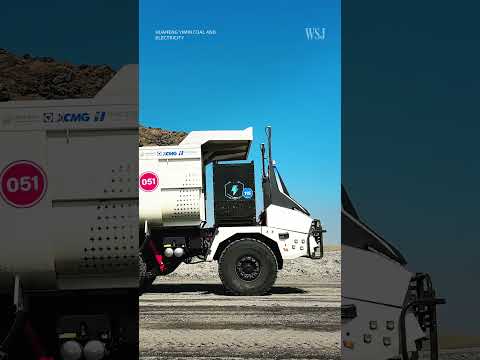
Why It Matters
This case study illustrates a critical intersection between legacy heavy industry and the rapid deployment of autonomous systems. In high-risk sectors like mining, the business case for automation is often driven as much by labor safety and climate constraints as by traditional efficiency gains, signaling a trend where 'harsh-environment' sectors may become the primary early adopters of robotics.
Strategic Implications
For mining operations, the transition to autonomous electric trucks represents a dual pivot: decarbonization and operational resilience. By removing human operators, companies can theoretically extend operating hours into extreme weather conditions that would otherwise force site shutdowns or create severe liability risks.
Evidence & Hype Audit
The reporting is observation-based but technically thin. While the scale and the existence of the autonomous trucks are well-documented in the visuals, the claims regarding solar-powered charging remain anecdotal and unsupported by infrastructure evidence. The narrative effectively captures the 'pilot' nature of the project rather than a proven, wide-scale operational standard.
Counterarguments
Critics might argue that the reliance on complex autonomous software and electric powertrains creates a new category of 'brittle' infrastructure. If a chassis issue renders an autonomous unit immobile, the cost of specialized remote repair could outweigh the efficiency gains of eliminating a human driver.
Who Should Care
- Mining operations managers looking to optimize labor safety.
- Energy infrastructure planners evaluating the feasibility of remote-site electrification.
- Robotics and autonomous system integrators seeking industrial use cases.
What To Do Next
- Conduct a cost-benefit analysis comparing fleet maintenance of autonomous vs. manual trucks.
- Audit the specific energy pathway for site-wide charging to verify the solar contribution.
- Establish baseline downtime metrics for the autonomous units to track failure rates versus human-operated counterparts.
- Investigate the software reliability protocols for operating these trucks in sub-zero environments.