
Why It Matters
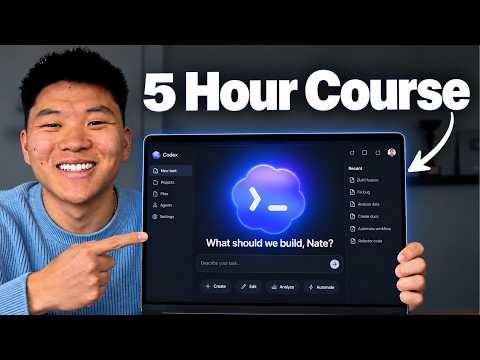
This course shifts the perspective of AI from 'chat-based productivity' to 'systems engineering.' By treating the AI as an operating system that requires architecture, maintenance, and audit cycles, users can move toward true autonomous delegation of business functions, which is essential for scaling beyond the limitations of manual input.
Strategic Implications
The shift toward locally-managed project structures implies a future where AI agency is tied directly to local file system access. Businesses that build these 'second brains' will have a significant moat, as their system's context becomes increasingly difficult for competitors to replicate. The emphasis on moving automations to external infrastructure (trigger.dev) signals a professionalization of the 'AI builder' role, moving away from ephemeral chatbot sessions toward robust, production-grade pipelines.
Evidence & Hype Audit
The content relies heavily on personal anecdote and live demonstration, which provides high fidelity for the 'how-to' aspect but low rigorous evidence for the universal superiority of one model (Astra) over another. The benchmark provided is a useful snapshot of task-specific performance but should be viewed as a baseline rather than a universal truth, as performance is highly variable based on prompt quality and infrastructure.
Counterarguments
Critics might argue that the complexity of maintaining a 'local AIOS'—managing folder structures, markdown rules, and environment variables—creates a high technical debt load. For smaller or less stable businesses, the time invested in 'AI architecture' might exceed the value of the automation itself, leading to 'over-engineering' where simple manual processes would have sufficed.
Who Should Care
- AI Consultants: Who need a repeatable framework for client discovery and value-based pricing.
- Solopreneurs: Looking to delegate recurring operations (trading, brief writing, lead response) to autonomous systems.
- Operations Managers: Interested in moving beyond manual SaaS workflows toward custom, agent-driven automation.
What to Do Next
- Audit Your Time: Identify the top 3 recurring, deterministic tasks that consume your week.
- Build the Context Base: Create your first
agents.mdfile to house your business's core rules and routing logic. - Draft a Skill: Reverse-engineer a single, narrow workflow from a recent output you liked.
- Externalize: Identify one automated task that runs frequently and sketch a plan to move it from Codex to an external host.