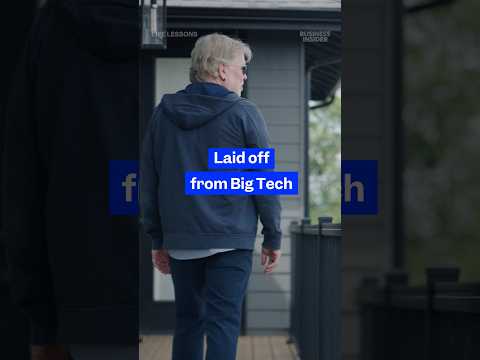
Losing a job can be gut-wrenching. Four #BigTech workers talk about the moment they were laid off.

Video thumbnail: Losing a job can be gut-wrenching. Four #BigTech workers talk about the moment they were laid off.
Sep 17, 20262m 13s video lengthBusiness Insider

The Signal

An abrupt, dehumanizing layoff is often the culmination of long-term organizational decay rather than a sudden, isolated event. While the specific rationale for job cuts remains unsettled, the experience of being let go via email after years of service exposes the fragility of professional loyalty and the severe psychological toll of sudden termination.

The Case

The Anatomy of an Abrupt Exit

  • The layoff process was marked by extreme impersonality: after missing a 9:00 a.m. meeting with high-level leadership, the speaker received an email on their work phone confirming their termination while dropping children off at school.0:08
  • Employees were given roughly one hour to vacate their positions, a window so brief that it stripped the transition of any dignity or professional closure.
  • The notification sequence culminated in a formal one-on-one meeting with a manager and HR, though the shock of the preceding email had already established the finality of the decision.

Psychological and Organizational Impact

  • Having survived previous rounds of downsizing, the speaker had developed a false sense of security, demonstrating how repeated layoffs normalize risk even when the underlying business is failing.0:48
  • The speaker notes the entire business unit was shut down, framing the loss as a structural necessity to "correct the ship" following a year of visible organizational decline.
  • The emotional aftermath was profound, moving from initial numbness and feeling like "a number" to a period of depression that required approximately nine months to process.1:51

The 1 Minute Signal Take

The transition from stable employee to terminated worker is frequently punctuated by a false sense of safety born from surviving prior cuts. The primary takeaway is that organizational decline is often observable long before the final layoffs occur, yet employees frequently underestimate their own vulnerability until the moment they are removed.

Pro Analysis

Why it Matters

This content is a stark reminder that in the current Big Tech landscape, 'operational agility' is frequently a euphemism for the total abandonment of long-term employee retention. It highlights the growing gap between the corporate narrative of 'we are all in this together' and the reality of algorithmic, email-based termination.

Strategic Implications

For employees, the lesson is clear: loyalty is a declining asset. Companies are treating business units as interchangeable components, and once a unit is deemed non-core, the individual experience of the staff is treated as a rounding error. Strategic career management now requires maintaining a professional presence outside of your current organization at all times.

Evidence & Hype Audit

This is a qualitative, anecdotal account. It lacks financial documentation or corporate HR policy evidence. It is high on emotional resonance but low on structural data. It should be treated as a representative case study of employee sentiment rather than a comprehensive report on corporate layoff practices.

Counterarguments

From the perspective of management, the 'abrupt' nature of these layoffs is often intended to mitigate security risks and prevent internal sabotage or data leakage during a sensitive organizational pivot. Managers might argue that providing longer exit windows in a crisis can be operationally untenable.

Who Should Care

  • Tech Professionals: To manage expectations of job security and plan for financial transitions.
  • HR & Management: To understand the long-term morale costs of dehumanizing termination processes.
  • Policy Makers: To observe the lack of protection for long-term employees in the event of mass business-unit closures.

What to do next

  • Diversify your professional network to ensure you are never dependent on a single employer for your career continuity.
  • Build a six-month emergency fund to provide a safety buffer against sudden, unexpected income loss.
  • Keep an offline record of your professional achievements and key contacts independent of corporate systems.
  • Evaluate your employer's financial health periodically to anticipate potential restructuring signs.
  • Proactively engage with mental health resources if you sense a 'darkening' of your career outlook due to workplace instability.

Share this

Written by: 1 Minute Signal Editorial Team