
Why it Matters
This content serves as a crucial reality check on the current hype cycle surrounding autonomous coding agents. It moves the discourse from 'AI replacing engineers' to 'AI changing the nature of engineering ownership,' which is a more accurate reflection of the current enterprise reality.
Strategic Implications
Organizations that attempt to fully automate the software development lifecycle will likely face significant technical debt. The emphasis here is on systems thinking. Strategic advantage will accrue to firms that focus on architectural clarity and human validation rather than those chasing the lowest token-cost or fastest completion time.
Evidence & Hype Audit
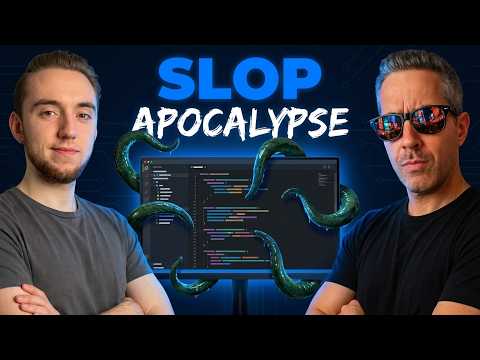
The content is high-signal, based on practitioner experience rather than theoretical research. While it avoids scientific rigor, it is remarkably honest about the 'slop' problem, which aligns with the common anecdotal experience of developers currently using LLMs for production code.
Counterarguments
Critics might argue that the focus on human-in-the-loop is merely a transition phase. As reasoning models improve, the necessity for human intervention in planning may decrease. Furthermore, the 'slop apocalypse' might be solved by better automated refactoring tools rather than the specific human-heavy approach advocated here.
What to do Next
- Implement a two-week, time-boxed experiment for your engineering team to establish baseline AI-coding habits.
- Audit your existing CI/CD pipelines to ensure they can handle the increased volume of AI-generated contributions.
- Establish a 'Clean Code' documentation policy that discourages AI-generated comments in favor of self-documenting code.
- Invest in training for junior engineers to focus on systems thinking rather than simple ticket execution.
- Diversify your model usage to avoid vendor lock-in and mitigate operational risks from provider updates.