
Why It Matters
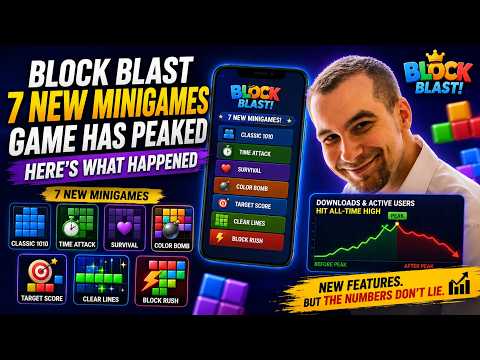
Block Blast represents the evolution of the 'hyper-casual' sector. The transition from a single-mechanic hit to a multi-game hub mirrors the broader industry effort to combat user acquisition saturation by increasing the lifetime value of existing users through internal cross-promotion.
Strategic Implications
This bundle strategy signals that developers have identified a ceiling for the core game loop. By providing an internal library of games, they effectively turn their user acquisition into a self-sustaining marketing engine, reducing the need for aggressive external spend on newer, unproven titles.
Evidence & Hype Audit
This content is based on observational market data rather than audited first-party figures. While the speaker provides concrete examples (UI changes, creative counts), their revenue projections and assertions about competition are speculative. The reliance on Sensor Tower data, which the speaker acknowledges may be flawed, requires the viewer to treat these dollar figures as 'directional' at best.
Counterarguments
Critics might argue that adding more games dilutes the brand's identity and causes 'feature creep.' If the new games are of lower quality, the increased complexity could paradoxically spike churn rates rather than improving retention.
Who Should Care
- UA Managers: To understand how successful clones are entering the market.
- Product Designers: To observe how to expand a single game into a portal.
- Investors: To monitor if these bundling tactics actually improve long-term monetization.
What To Do Next
- Verify the retention data of the new menu items vs. the legacy core loop.
- Track the US-to-global traffic ratio for Color Block Combo Blast to identify if they bridge the monetization gap.
- Recalibrate revenue models assuming a likely undercount in current third-party tracking tools.
- Analyze the Q3/Q4 seasonal trends for the game to test the 'autumn surge' hypothesis.