
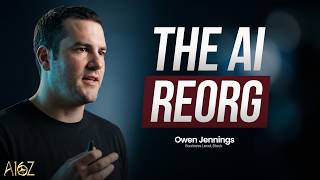

- The traditional correlation between headcount and output has broken down due to AI productivity gains.
- Engineering, product, and design teams now utilize 'agentic' workflows instead of linear, manual processes.
- Block’s internal platform, 'Goose,' allows the firm to switch between various LLMs based on task requirements.
- The company avoids taking risks in high-stakes regulatory and compliance areas by maintaining human-in-the-loop oversight.
- Generative UI will soon replace static app interfaces, creating distinct, personalized experiences for every user.
- Being 'founder-led' is presented as a critical advantage that allows for the bold, structural changes required to adapt to AI.
- Jevons paradox is identified as the likely driver for future growth, where cheaper production leads to a surge in the total volume of software built.
Back to Feed
Source Video
How Block Restructured for an AI-First Future
This discussion examines how Block successfully reorganized its internal operations and development teams by leveraging AI agentic systems like 'Goose' to significantly increase productivity.
Key Takeaways
- Block implemented a major workforce reduction by identifying that AI tools now allow a small team to achieve results previously requiring much larger groups.
- The shift focused on development teams, where AI agents can build products with significantly fewer human engineers and designers.
- Rather than simple automation, Block uses an agentic framework called 'Goose' which is model-agnostic and handles complex, cross-functional organizational workflows.
- The internal restructure replaced hierarchical silos with smaller, fluid squads capable of faster iteration and autonomous software deployment.
Talking Points
Analysis
This video is vital for executives and product leaders because it provides a blueprint for 'AI-first' corporate restructuring. It ...
Full analysis available on Pro.
Time saved:
Back to Feed