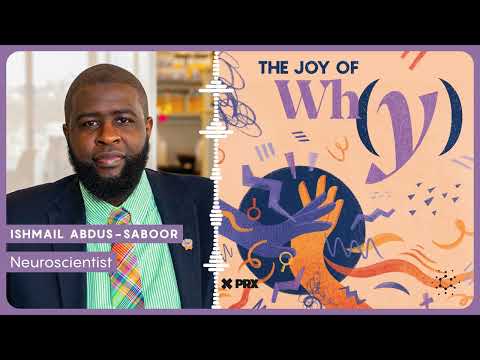
How Does Touch Lead To Pain Or Pleasure? | PODCAST: The Joy of Why

Video thumbnail: How Does Touch Lead To Pain Or Pleasure? | PODCAST: The Joy of Why
Aug 7, 202653m 28s video lengthQuanta Magazine

The Signal

Ishmail Abdus-Saboor, a neuroscientist at Columbia University, argues that pain is biologically separable into sensory detection and emotional suffering. His lab maps these pathways to identify potential therapies that could alleviate chronic distress without destroying the body's protective ability to sense danger, a distinction that remains clinically difficult due to the lack of an objective pain biomarker.

The Case

The Science of Touch and Pain

  • The field classifies somatosensation into distinct modalities, such as temperature and mechanical pressure, governed by specific receptor proteins like TRPV1 and Piezo1/2.15:08
  • Nociception—the reflex withdrawal from noxious stimuli—is a basic biological response, whereas "pain" requires central brain processing, memory, and affective valence.9:44
  • Abdus-Saboor identifies a specialized neural pathway for social touch that triggers dopamine release, suggesting that physical contact could be harnessed to treat anxiety, depression, or stress.37:07
  • The same touch stimulus can be perceived as positive or negative depending on context, a gating process the lab believes is regulated by the orbitofrontal cortex.47:21

Research Methods and Challenges

  • As of April 2026, pain diagnosis relies heavily on human self-report because no definitive physiological biomarker exists for objective measurement.21:57
  • Researchers use rodent models to study these circuits, but Abdus-Saboor acknowledges this approach has limits in explaining conscious interiority and the highest levels of human cognition.49:00
  • Naked mole rats serve as extreme comparative models, as these highly social, long-lived rodents display unusual pain insensitivity, providing an evolutionary outlier for study.41:22
  • Animal experiments remain necessary to understand chronic pain, though the lab is strictly governed by oversight to minimize animal numbers and induced suffering.22:55

The 1 Minute Signal Take

The core therapeutic frontier is not to eliminate pain, but to selectively edit its negative emotional component while leaving the protective sensory warning system intact. While rodent circuits provide a tractable model for these pathways, moving from biological mechanism to human relief remains a prospective challenge that will likely require integrating neuroscience with psychology.

Pro Analysis

Why It Matters

Pain management is currently at a therapeutic stalemate, characterized by the broad, systemic, and often addictive effect...
Full analysis always available on Pro.

Time saved:51m 42s

Share this

Tags

Written by: 1 Minute Signal Editorial Team