
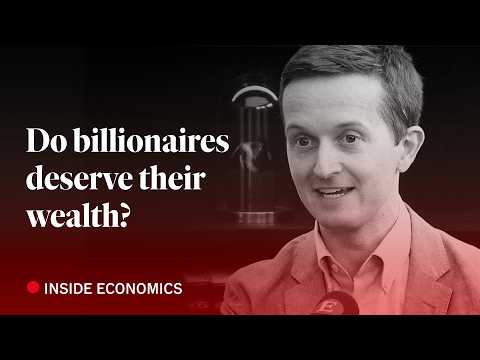
Why It Matters
The debate moves beyond simple 'tax the rich' slogans, grounding the conversation in the measurable divergence between private gain and public utility. By framing billionaire wealth as a distribution problem rather than a theft of labor, it shifts the focus toward how much society stands to lose if the current incentive structures are dismantled.
Strategic Implications
For regulators and policymakers, the core challenge is decoupling the moral 'desert' from economic efficiency. If redistribution is pursued, it must be calibrated to avoid the 'incentive kill' scenario, where the very act of seizing wealth destroys the creation of future, shared consumer value.
Evidence & Hype Audit
The content relies heavily on the '2% capture' estimate as its primary anchor. While Nobel-cited, this is a simplified model of a complex global economy. The use of specific celebrities (Swift, Rowling) provides strong emotional resonance but is intellectually narrow; it lacks a granular analysis of billionaire wealth derived from legacy assets or financial rent-seeking, which functions differently than founder-led entrepreneurship.
Counterarguments
Critics would argue that measuring 'value' by consumer utility (the 2% figure) ignores the environmental, social, and political costs of unchecked growth. Furthermore, the argument that these jobs would not exist otherwise is a fatalistic assumption—capital and demand would likely shift to other, potentially more equitable, business models if the current giants were constrained.
Takeaways
- Executives: Understand the social contract by quantifying value provided to end-users.
- Policymakers: Prioritize systemic impact assessments over populist wealth-targeting.
- Researchers: Investigate if the 2% rule holds across different sectors (e.g., tech vs. manufacturing).
Next Steps
- Audit personal opinions: Do you distinguish between value creation and moral worth?
- Watch for policy shifts regarding wealth taxes and their stated impacts on R&D.
- Analyze the specific industry in question before applying a general theory of 'wealth as value index.'