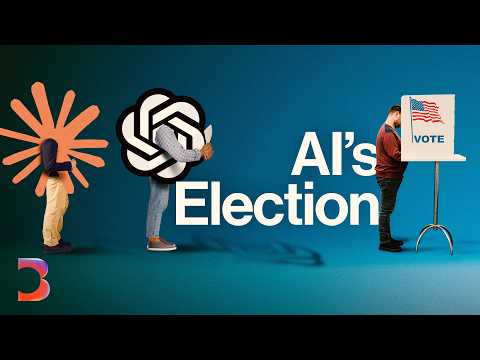
Why Big AI Is Pouring Millions Into the Midterms

Video thumbnail: Why Big AI Is Pouring Millions Into the Midterms
Oct 16, 202611m 37s video lengthBloomberg Originals

The Signal

AI regulation has emerged as a central 2026 midterm battleground, fueling a multi-million-dollar proxy war between industry factions. As companies attempt to preempt sweeping guardrails through aggressive primary election spending, they face deepening public backlash over physical infrastructure and broader existential concerns. The conflict centers on a high-stakes question: who holds the authority to set the rules for the future of artificial intelligence.

The Case

The Spending War

  • AI-aligned political groups have reportedly raised nearly $300 million for the 2026 midterms, shifting the focus of influence from direct lobbying to intervening in primaries to secure sympathetic candidates in safe districts.1:48
  • Leading the Future, which claims to have raised $140 million, pushes for a light-touch national regulatory framework to protect U.S. industrial competitiveness against China.2:56
  • Public First Action, backed by an estimated $83 million from the AI firm Anthropic, acts as a direct counterweight by funding candidates who prioritize public-interest safeguards and stricter federal guardrails.3:35

Local and Existential Friction

  • AI infrastructure is hitting a local wall: residents are successfully organizing against massive data-center projects, such as a rejected 2,000-acre development near Manassas National Battlefield Park that faced intense criticism over water use, electricity costs, and environmental impact.8:35
  • Jacob Coxon, a former researcher at OpenAI and Anthropic, has gone on record with the warning that the current trajectory of AI development could lead to a loss of human control and potential extinction, raising the stakes beyond standard policy debate.10:08

The 1 Minute Signal Take

This is a classic industrial struggle for regulatory capture masquerading as a political debate, made volatile by the unpredictable combination of corporate money and localized community resistance. While industry groups hope to standardize the rules, the widening divide between economic-growth framing and genuine public fear suggests that no amount of campaign spending will easily quiet the underlying governance conflict.

Pro Analysis

Why It Matters

The transition of AI from an academic and technical discussion to a core political issue signifies that the technology has reached a critical stage of public and private impact. By spending hundreds of millions, these firms are treating regulation as a commodity to be purchased through electoral engineering rather than a public policy debate.

Strategic Implications

The shift toward primary intervention is a sophisticated strategic maneuver. By winning in safe districts, these organizations effectively bypass the uncertainty of the general election, ensuring that whoever wins the seat is already predisposed toward their agenda. This consolidates power within the legislature before the public even enters the voting booth.

Evidence & Hype Audit

The content reflects high-level political reporting. While it captures the tension accurately, some claims—such as the 'trillion dollars' invested in data centers or the precise $300 million fundraising figure—lack granular sourcing in the transcript. These figures should be treated as directional indicators of scale rather than audited financial data.

Counterarguments

Critics of the 'industry-influence' narrative might argue that a national regulatory framework is essential to maintaining U.S. competitiveness against rivals like China. From this viewpoint, spending is not 'buying' influence but rather 'defending' the domestic tech sector from fragmented, inefficient state-level regulations that could cripple innovation.

Who Should Care

  • Investors: Monitor the success of these PACs as an indicator of future regulatory hurdles or tailwinds.
  • Local Officials: Prepare for significant community backlash regarding infrastructure siting.
  • Policy Wonks: Watch the competition between state-level and federal-level preemption of AI laws.

What to Do Next

  • Track the primary wins/losses of candidates backed by Leading the Future vs. Public First Action.
  • Analyze state-level legislation for emerging trends in data-center regulation.
  • Review campaign finance disclosures to identify secondary funding sources for these AI super PACs.
  • Examine existing local zoning ordinances to see how they might be updated for high-compute infrastructure.
Time saved:8m 26s

Share this

Tags

Written by: 1 Minute Signal Editorial Team