
Why It Matters
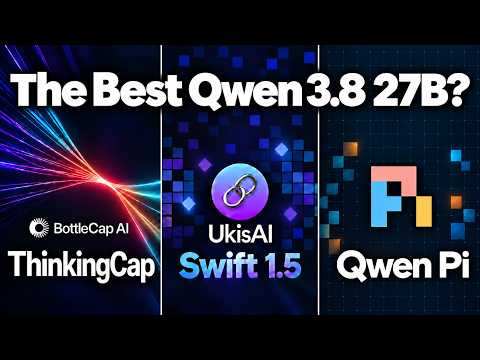
The shift toward 'reasoning effort' control changes how developers deploy models. Rather than just selecting a base model, the future of inference is becoming a portfolio of 'effort-optimized' fine-tunes tailored to specific latency-to-intelligence ratios.
Strategic Implications
Businesses now face a 'specialization tax.' To get peak performance, companies may need to maintain different fine-tuned versions of the same base model for distinct use cases—an coding agent vs. a general knowledge bot. This favors developers who build highly modular systems capable of hot-swapping models based on the task type.
Evidence & Hype Audit
The content relies on reported benchmarks (LiveCodeBench, GPQA, TerminalBench) and live demos, which is highly trustworthy compared to vague marketing. However, the models are evaluated by their creators, and the '58.5% fewer tokens' claim from Swift should be treated as a best-case peak rather than a universal average.
Counterarguments
Critics might argue that these specialized fine-tunes are 'brittle.' By optimizing for specific benchmarks, these models may lose the serendipitous reasoning capability inherent in a base model’s wider training distribution.
Who Should Care
- Inference Engineers: Evaluating cost-per-token and latency impacts.
- Agent Framework Developers: Assessing whether harness-specific tuning (like QwenPi) is worth the overhead.
- CTOs: Managing the trade-off between commercial licensing costs and performance gains.
What to Do Next
- Benchmark candidate models using your specific production prompts.
- Evaluate licensing terms against your revenue model.
- Measure latency benefits in your actual vLLM deployment environment.
- Test speculative decoding throughput with the target fine-tuned models.