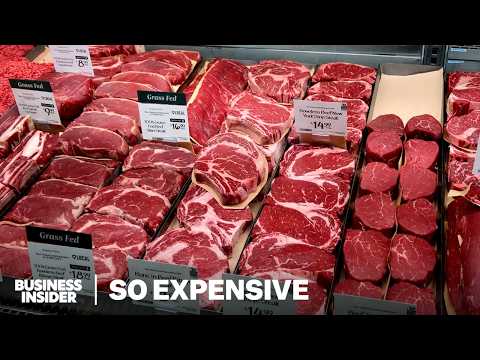
Beef Is More Expensive Than Ever. So Why Are Cattle Ranchers Broke?

Video thumbnail: Beef Is More Expensive Than Ever. So Why Are Cattle Ranchers Broke?
May 30, 202614m 44s video lengthBusiness Insider

The Signal

Four massive beef-processing firms control 80% of the U.S. market, a consolidation that has sparked federal investigations and massive antitrust lawsuits. While shoppers and restaurants face record costs, the central tension is whether these prices result from illegal price-fixing or a combination of drought, labor shortages, and supply-chain bottlenecks. The big four have not been convicted of any wrongdoing, and the relative impact of their market power versus external environmental and economic pressures remains hotly contested.

The Case

  • Four firms hold an 80% market share of U.S. cattle processing, a level of concentration that has invited scrutiny from the DOJ and private plaintiffs—including McDonald’s and Target—who allege illegal price manipulation.0:11
  • Ranchers, acting as price takers in a bottlenecked supply chain, face a 29% surge in operating costs since 2020 and record-high herd maintenance expenses, often reaching $1,100 per cow annually compared to $500–$800 previously.3:54
  • Environmental and systemic factors exacerbate the strain, with 61% of U.S. cattle currently on land affected by drought as of May 2026, contributing to a total herd size at its lowest point since 1951.3:34
  • In October 2025, a policy announcement regarding increased beef imports from Argentina triggered immediate market anxiety, with some ranchers estimating a loss of $200–$300 per cow sold due to resulting price volatility.8:11
  • Small businesses are feeling the squeeze, as Hamburger America—a New York City burger shop—reports that wholesale beef costs have risen over 20% since 2023, forcing the owner to juggle rising menu prices without sacrificing product quality or portion sizes.10:41
  • While rancher-led plaintiffs point to widening price spreads as evidence of anti-competitive behavior, the Meat Institute, an industry lobbying group, claims that high cattle costs and external pandemic-era disruptions justify current margins, though they provide no independently audited data to support this.6:49

The 1 Minute Signal Take

This is a complex market crisis where the absence of criminal conviction is frequently conflated with an absence of structural abuse, leaving the truth squarely in the middle of a systemic failure. The video is worth your time because it clearly distinguishes between the verifiable reality of rancher-level cost escalation and the speculative, often politically charged arguments surrounding packer guilt. It provides a necessary reality check on how policy announcements can destabilize a fragile, consolidated market before consumers see any relief.

Pro Analysis

Strategic Significance:

The beef market is the ultimate case study in the perils of supply chain extreme centralization. It matters because it demonstrates that even in a high-demand commodity market, concentration can bifurcate the experiences of producers and consumers—with ranchers losing value while shoppers pay more.

Who Should Care:

  • Policymakers: The sector shows that antitrust enforcement and trade policy have immediate, often unintended, real-world fiscal consequences for producers.
  • Investors: Understanding the 'big four' dynamic is essential for tracking long-term commodity price trends and regulatory risk in the food sector.
  • Small Business Owners: The food service industry must prepare for a landscape where input costs are no longer tethered to traditional supply-demand cycles but to the consolidated power of a few processors.

Contrarian Takeaway:

Improving consumer prices by increasing herd size may actually accelerate the destruction of the independent ranching class if current 'get big or get out' market dynamics continue to favor large-scale, consolidated industrial production.

Time saved:11m 57s

Share this

Tags

Written by: 1 Minute Signal Editorial Team