
- OAuth tokens are exclusively intended for official browser-based AI products and tools.
- Using account-bound tokens in third-party automation tools violates consumer service terms.
- Companies like Anthropic and Google are taking active measures to identify and block these unauthorized OAuth sessions.
- Local deployment tools operate more reliably and safely when authenticated via official developer API keys.
- Subscription-based models are subsidized by companies; using them as high-volume backends for agents undermines this economic model.
- Account suspension is a very real possibility for those misusing authentication methods.
- API keys provide a scalable and compliant path for integrating AI models into local development environments.
Be Careful - Don't get banned by OpenClaw/Clawdbot use!
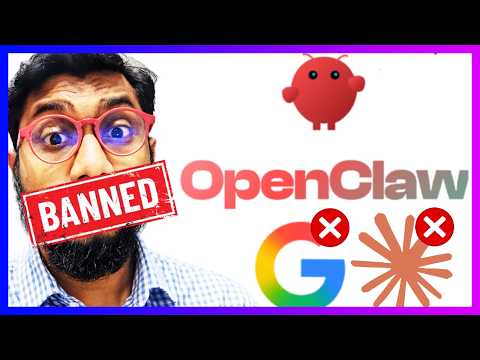
1littlecoder
Key Takeaways
- Using OAuth tokens from subscription services like Claude Pro or Google Gemini Advanced in third-party tools violates service terms and risks account suspension.
- AI companies deliberately separate subscription-based access from API-based access to prevent unlimited, subsidized usage patterns.
- To safely integrate LLMs into local development environments like OpenInterpreter or Claude Code, always use dedicated API keys rather than account-bound authentication tokens.
Talking Points
Pro Analysis
The central premise—that users should rely on formal APIs rather than browser sessions for automation—is strategically sound and vital for security. For organization leaders, this highlights a 'shadow IT' risk: employees running local automation scripts could inadvertently lose access to crucial corporate AI accounts.
The most non-obvious takeaway is that 'free' or 'unlimited' access to powerful models via third-party tools is often a form of unauthorized cost-shifting. Users are essentially freeloading on subscription-based consumer plans that were never intended to support production or agentic workflows. Next steps for organizations include auditing developer tools to ensure they use enterprise-grade API keys rather than individual user credentials.
Time saved:
Written by: 1 Minute Signal Editorial Team