
Why it Matters
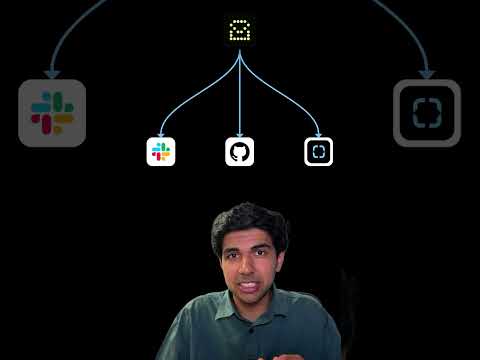
The integration of LLM-based agents into existing communication channels like Slack represents a shift toward ‘conversational operations.’ By treating the chat window as an execution engine, teams can drastically reduce the ‘context switching’ tax, where developers lose time toggling between communication tools and IDEs/browsers.
Strategic Implications
This approach suggests a move away from monolithic developer tools toward specialized, modular agents. If developers can trigger PRs from Slack, the next logical step is automated testing and deployment, potentially moving toward a ‘zero-touch’ delivery model for minor feature requests.
Evidence & Hype Audit
This content is high-narrative but low-technical-evidence. It functions as a product showcase rather than a technical audit. The ‘few lines of code’ claim is highly subjective and likely refers to using existing high-level abstractions rather than writing raw logic. It is persuasive but lacks the documentation (e.g., code snippets, logs) required to verify the robustness of the agent in a production environment.
Counterarguments
The risk of autonomous agents committing code directly from chat requests is significant. Without rigorous human-in-the-loop review, agents may introduce security vulnerabilities or architectural regressions that are harder to debug than manually written code. Over-reliance on ‘minimal setup’ can also lead to ‘black box’ engineering where team members do not understand the underlying agent logic when it fails.
Who Should Care
- Engineering Managers: Look for ways to reduce administrative overhead in PR workflows.
- Developer Experience (DevEx) Engineers: Analyze whether this integration pattern can be adapted for internal toolsets.
- Individual Contributors: Use this as a template to identify repetitive, non-creative coding tasks that could be offloaded to an agent.
What to do Next
- Define a list of 3-5 repetitive ‘administrative’ coding tasks your team performs.
- Evaluate your current repository permissions to ensure that any agent-based tool has restricted, least-privilege access.
- Prototype a simple Slack-bot that can only ‘read’ PR status before graduating to ‘write’ access.
- Audit your testing suite; an agent is only as good as the automated tests that guard its output.
- Set up a sandbox environment to monitor agentic code generation before it ever hits a production branch.