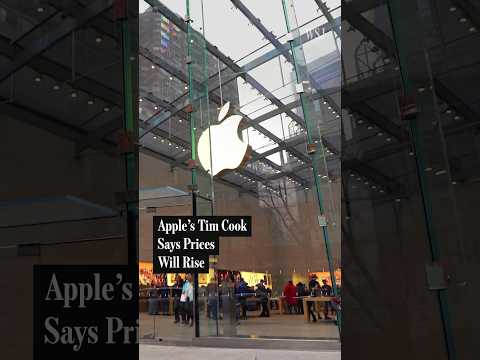
Why Apple CEO Tim Cook Says Prices Will Increase

Video thumbnail: Why Apple CEO Tim Cook Says Prices Will Increase
Jun 17, 20262m 2s video lengthThe Wall Street Journal

The Signal

AI companies are aggressively outbidding traditional tech giants for memory and storage components, forcing a market shift that has stripped Apple of its historical leverage. With component costs rising sharply, Apple leadership now signals that consumer price increases are unavoidable, though neither the scale nor the timing of these hikes remains settled.

The Case

  • Apple — the consumer hardware giant that was once the world's largest storage buyer — says it can no longer absorb rising component costs alone, marking a shift from its long-term deflationary trends.
  • TechInsights — a research firm specializing in semiconductor analysis — estimates the memory and storage costs for the upcoming iPhone 18 Pro will jump to $200, compared to $50 for the previous model.1:25
  • AI firms are currently flooding the market with capital to secure supply, often forcing Apple to wait in line rather than dictating pricing as it did since the iPod era.1:00
  • Industry counterparts report that the current supply crisis is worse than the pandemic-era chip shortages or historic tariff impacts, though these comparative claims remain unsupported by independent audit or detailed market data.1:49
  • The narrator frames this as a broad tax on any device containing memory or storage, though the transcript provides no item-by-item evidence to support such a universal breadth of impact.

The 1 Minute Signal Take

The video identifies a distinct structural shift in the semiconductor market that poses a legitimate threat to consumer price stability for Apple products. It is worth watching for the specific TechInsights cost breakdown, which provides the most concrete evidence of the scale of the current price hike, though the broader warnings about "every device" should be viewed as speculative. Skip it if you are looking for specific pricing or product-launch timelines, as those remain entirely unresolved.

Pro Analysis

Strategic Significance: This represents a fundamental reversal in semiconductor economics. The deflationary cycle that sustained the tech sector for thirty years is encountering a hard limit, marking a transition from a 'supply-abundant' market to one governed by scarcity-driven inflation.

Who Should Care: Technology investors and individual consumers should track this closely. Investors need to monitor hardware margins, while consumers should anticipate that the historical trend of getting 'more for the same price' is being replaced by 'the same for a higher price.'

Contrarian Takeaway: Apple’s loss of leverage against memory makers might suggest that the 'Big Tech' moats surrounding hardware supply chains are thinner than analysts previously estimated when faced with massive, capital-intensive shifts in enterprise demand.

Share this

Tags

Written by: 1 Minute Signal Editorial Team