The iPhone’s Last Stand | Stratechery by Ben Thompson

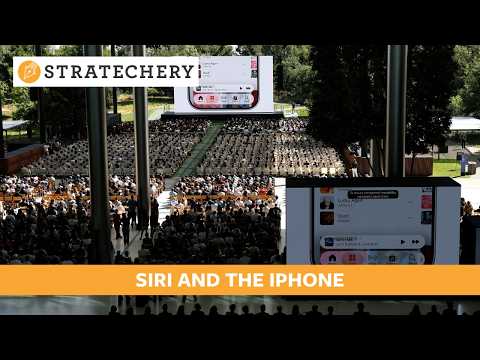
Video thumbnail: The iPhone’s Last Stand | Stratechery by Ben Thompson
Jun 17, 202611m 21s video lengthStratechery

The Signal

Apple and Microsoft are steering toward opposite AI futures, with a fundamental dispute over whether users want autonomous productivity agents or contextual personal assistance. Microsoft’s "Project Solera" positions hardware as thin portals for enterprise-grade cloud agents, while Apple leverages its massive installed base to keep the iPhone central by prioritizing personal context and privacy-preserving retrieval over pure frontier model performance. The central tension pits Microsoft's reliance on enterprise-driven agentic work against the Apple-advocated view that consumer demand is overwhelmingly tilted toward convenience rather than productivity.

The Case

  • Apple is differentiating Siri by using privileged personal data from the iPhone—including screen awareness, messages, and voicemail—to solve grounded tasks that generic chatbots cannot access.6:55
  • Microsoft framed its new "Project Solera" at its Build developer conference as a chip-to-cloud ecosystem, explicitly designing devices to be portals for agents rather than standalone computers.2:00
  • Apple’s demonstrated Siri capabilities include contextual retrieval and app interaction, though the source notes the demo remained short of "state-of-the-art" autonomous action like entering a lottery on a user's behalf.4:56
  • Microsoft’s strategy leans into an enterprise-centric model because, as the source argues, businesses possess the necessary context and clear economic incentives to fund long-running, autonomous productivity agents.10:13
  • Apple currently utilizes a 20-billion-parameter on-device mixture-of-experts model to manage performance while relying on private cloud compute—powered by Nvidia chips in Google data centers—to handle heavy lifting without sacrificing device security.9:20
  • The transcript makes an unsupported, broad sociological claim that consumers do not want to be productive, using this to justify why Apple’s less-ambitious "good enough" Siri approach is commercially sufficient.7:36

The 1 Minute Signal Take

The conflict here is less about technology—both firms have the infrastructure to match each other—and more about who better understands their own customer base. Apple’s case is stronger because it monetizes an existing, high-trust relationship with consumers, whereas Microsoft’s model faces an uphill battle to turn "agent-first" hardware into a mass-market reality. You can skip the video; the summary covers all technical claims and the strategic divide without the keynote's marketing padding.

Pro Analysis

Strategic Significance

This matters because it defines the structural winners of the next decade. If the 'thin client' cloud model wins,...
Full analysis always available on Pro.

Time saved:9m 29s

Share this

Tags

Written by: 1 Minute Signal Editorial Team