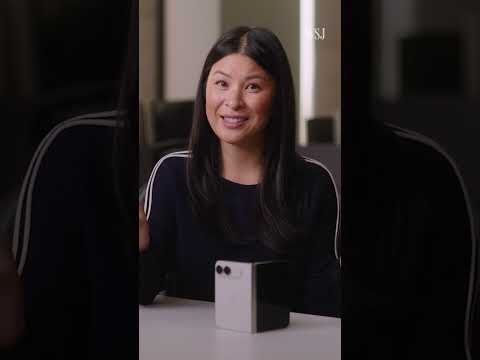
I Tested Apple’s iPhone Duo for a Week. Is It Worth $2,000? | WSJ

Video thumbnail: I Tested Apple’s iPhone Duo for a Week. Is It Worth $2,000? | WSJ
Oct 21, 20262m 16s video lengthThe Wall Street Journal

The Signal

Apple’s newly unveiled Duo, a folding phone-tablet hybrid, challenges the expectation of a productivity-focused device by excelling instead as a premium consumption tool. While physically impressive, its design necessitates two-handed operation and compromises on flagship hardware features. The central trade-off lies between its expansive display for leisure and the persistent ergonomic strain users face when working on the go.

The Case

  • Ergonomics are the primary friction point: the device is thicker and wider than standard iPhones, making one-handed use nearly impossible even when closed and often causing hand fatigue during prolonged sessions.0:25
  • The Duo is marketed as a high-end tool but functions best as a passive device for watching, reading, and scrolling, leading the reviewer to describe it as a 'super chill' rather than 'super productive' iPhone.0:49
  • Hardware trade-offs are significant for a high-cost device, including a limited 2x zoom lens compared to the 8x zoom on the Pro, a lower-resolution selfie camera than the iPhone 17, no Face ID, and slower wired charging speeds.1:44
  • Apple claims upcoming software updates, such as Apple Pencil support and a 'Reachability' feature intended to shift the display, will arrive later this year to mitigate current usability shortcomings.
  • High demand or production constraints have already pushed delivery dates into 2027 for new buyers, a delay that may allow third-party developers more time to optimize their apps for the foldable screen.2:02

The 1 Minute Signal Take

If you are seeking a primary productivity machine, the current Duo is a poor fit; its true value lies in passive entertainment for those willing to accept significant ergonomic and hardware compromises. Expect this first-generation device to remain a niche tool until subsequent software updates and hardware iterations resolve its fundamental usability bottlenecks.

Pro Analysis

Why It Matters

The iPhone Duo represents Apple’s experimental foray into a mature category (foldables). It demonstrates a shift in their design philosophy: prioritizing the 'consumption' use case—which drives high daily engagement—over the 'productivity' narrative that often dominates high-end smartphone marketing.

Strategic Implications

Apple is signaling that they are willing to launch 'imperfect' hardware to capture the premium market segment early. By pinning future utility on software (Apple Pencil support, reachability), they are attempting to extend the product lifecycle of a first-gen device that is currently hardware-constrained.

Evidence & Hype Audit

The content is a subjective but grounded user review. It provides clear, falsifiable claims (camera zoom specs, absence of Face ID). It is not a broad market study, so it should be treated as a representative 'day-in-the-life' experience rather than an exhaustive performance benchmark.

Counterarguments

Critics might argue that early adopters don't care about these specific trade-offs; they value the prestige of a new form factor. Furthermore, the claim that the device is 'bad for productivity' is subjective and could be mitigated by the right set of third-party apps once the hardware becomes more ubiquitous.

Role-Specific Takeaways

  • Investors: Monitor supply chain constraints that pushed delivery to 2027; this indicates potential manufacturing bottlenecks for foldable screens.
  • Power Users: Temper expectations; this is currently a secondary device for consumption, not a primary driver of mobile work.
  • Developers: Focus on large-screen optimization now; the hardware will inevitably reach the hands of early adopters regardless of initial bugs.

What To Do Next

  • Assess your primary use case: Is it for work or pure entertainment?
  • If you pre-ordered, check if the 2027 delivery delay matches your current upgrade cycle needs.
  • Wait for the first wave of software updates to see if 'Reachability' actually solves the one-handed strain.
  • Compare the camera trade-offs against your own photography habits before committing to the premium price.

Share this

Tags

Written by: 1 Minute Signal Editorial Team