
Back to Feed
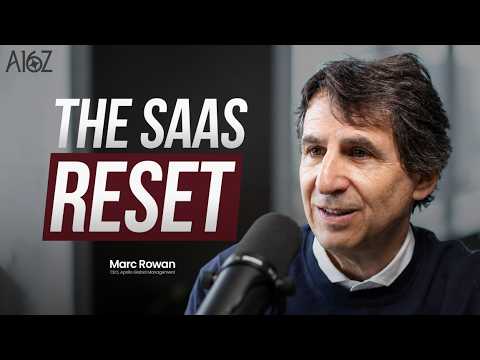
Private Markets and The Future of Capital Allocation with Marc Rowan | The a16z Show
The Signal
Apollo, the trillion-dollar firm once defined by private equity, argues its future lies in acting as the primary credit-based intermediary for an era of public-market concentration and AI-driven industrial expansion. While Marc Rowan, the firm's leader, positions Apollo as an indispensable partner for retirement income and complex capex, his broad forecasts regarding AI's impact and private-market necessity remain strategic assertions rather than settled facts.
The Case
- Apollo’s core business has shifted: 80% of its assets under management are now credit, with a heavy emphasis on investment-grade products rather than traditional leveraged buyouts.
- The firm is aggressively standardizing private credit to behave like a scalable public product, with plans to offer daily estimated valuations across its entire credit platform by the end of September.
- Rowan expects AI to permanently impair returns for enterprise-software-heavy private equity, noting that 30% of the industry has been committed to that sector over the past decade.
- The firm predicts a massive reallocation of capital into data centers, energy, and robotics, framing this as a new 'industrial renaissance' that requires private financing structures.
- Apollo enforces a formalized culture of 'fast failure' where employees are punished for hiding or failing to fix mistakes, but protected for making honest, well-intentioned errors.
- Rowan defended his recent public intervention in University of Pennsylvania leadership, framing donor pressure—including the tactic of giving only a 'dollar per year'—as a necessary moral stance against anti-merit agendas.
The 1 Minute Signal Take
Rowan’s case for Apollo's evolution is coherent, but the reader should note that his market forecasts are inherently self-serving, as they advocate for a future where investors must rely on Apollo’s private credit ecosystem for diversification. Watch for his sharp framing of internal culture and institutional pressure; skip it if you are looking for an academic critique of private credit, as this is a masterclass in executive positioning rather than a balanced industry analysis.
Time saved:
Back to Feed