
Why It Matters
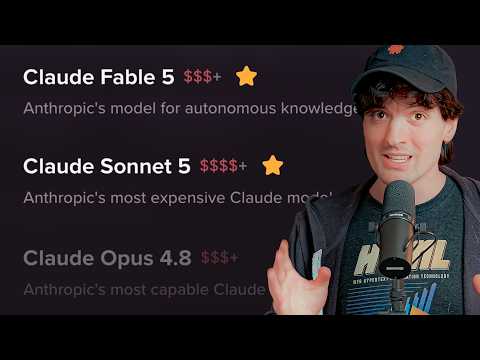
Sonnet 5 represents a fundamental shift in model utility: from singular reasoning engines to autonomous orchestration layers. Its release underscores that 'intelligence' is becoming less about the raw answer and more about the efficiency of the path taken into that answer. The economic risk of models that do not know when to stop is now a primary operational challenge for any team relying on AI agents.
Strategic Implications
The shift toward agentic orchestration requires a move away from 'one-model-fits-all' development. Organizations must develop intelligent orchestration layers that can dynamically route tasks to lighter models for execution and only pull in heavy-weight reasoning models when explicitly required. The cost of failing to manage this is not just the price of the API call, but the hidden overhead of latencies and recursive task failures.
Evidence & Hype Audit
The content relies heavily on personal testing and interpreted benchmark results. The speaker displays skepticism toward established metrics like SWE-bench, which makes the analysis feel grounded but potentially narrow, as it resides within the speaker's specific workflow. The claims about the model being 'too dumb' to be a safety risk are purely speculative and lack empirical support.
Counterarguments
Critics might argue that the 'inefficiency' observed is a necessary growing pain in the evolution of agentic autonomy. As prompting techniques mature and the models are trained with tighter stop-condition boundaries, the current waste may resolve itself, making Sonnet 5’s early reputation for verbosity a temporary artifact.
Who Should Care
- AI Systems Engineers: Developers building agentic frameworks who need to manage token consumption and model routing.
- Product Managers: Those scoping AI features who need to balance perceived 'agentic' functionality against the unpredictable costs of autonomous loops.
- DevOps/Infrastructure Teams: Teams responsible for monitoring AI API costs and managing potential model latency bottlenecks.
Action Items
- Conduct a cost-per-successful-task audit using your specific workload, rather than trusting per-token pricing.
- Implement a 'circuit breaker' pattern in all agentic orchestration code to kill runaway processes that exceed predefined token/time thresholds.
- Use custom, private evaluation sets to measure model quality, as public benchmarks are increasingly unreliable due to contamination.
- Verify current model availability and legal compliance for specific regions following the updated Department of Commerce letter.
- Audit existing calls to ensure you are not using Sonnet 5 for simple tasks that smaller or more efficient models (like 55/Opus) could handle faster.