
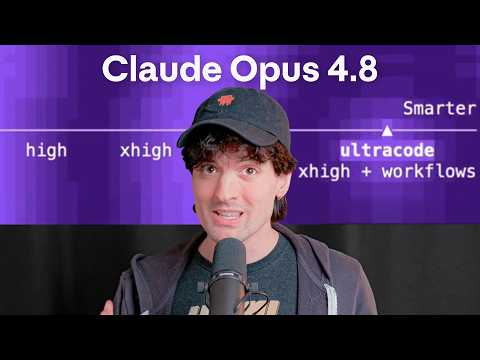
Strategic Significance
This release highlights the friction between 'agentic' autonomy and economic viability. By moving toward parallelized sub-agent workflows, Anthropic is banking on a future where compute is cheap enough to power recursive self-correction. For now, however, this approach frequently leads to 'token maxing' that creates a poor user experience regardless of the model's intellectual capability.
Who Should Care
- DevOps and Engineering Leads: Those managing large-scale migrations should watch the development of dynamic workflows to see if reliability increases enough to justify the massive compute premiums.
- Pricing Model Skeptics: Investors and operators should watch how Anthropic evolves its subscription tiers as the cost-per-user in autonomous agent mode remains arguably unsustainable.
Contrarian Takeaway
'Laziness' in language models might actually be a feature, not a bug, in enterprise environments. By forcing models to be highly 'honest' and 'thorough' (as in Opus 4.8), we may be inadvertently training them to burn infinite tokens on minor tasks that a 'lazier' model would have solved instantly.