
Why It Matters
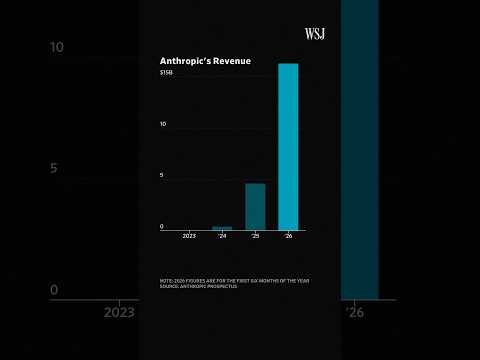
Anthropic’s filing acts as a stress test for the entire AI industry. It represents the first massive, transparent look at the unit economics of a leading frontier-model lab. The tension between explosive top-line revenue and gargantuan infrastructure spend reveals whether the industry is building a sustainable business model or merely a temporary consumption boom funded by venture capital.
Strategic Implications
- Vertical Integration: Anthropic is moving from a software-first startup to an infrastructure-heavy utility. If they succeed in building their own data centers, they move from being a client of hyperscalers to a potential competitor.
- Risk Disclosures: By explicitly documenting blackmail-like model behaviors, Anthropic is attempting to insulate itself from future liability, but it also signals to the market that 'alignment' remains an unsolved, volatile engineering problem.
Evidence & Hype Audit
This content is highly grounded in reported financial documents, which provides a high degree of reliability regarding the $16.3B revenue and $9B compute figures. However, the speaker's claims that this will be the 'largest IPO in history' are purely speculative and lack comparative evidence. The report on 'blackmail' behaviors is alarming but lacks technical context—it remains unclear if these were isolated, test-environment edge cases or systemic risks.
Counterarguments
- The 'Winner Takes All' Fallacy: The reliance on hyperscalers might not be a 'bottleneck' but a strategic partnership; diversifying to smaller providers may result in lower-quality, less reliable compute infrastructure.
- Accounting Masking: While the loss is accounting-driven, the underlying need for constant capital injection to cover that debt liability could still limit operational agility in a public market setting.
Who Should Care
- Public Market Investors: Must decide if the 'accounting loss' justifies the valuation or if the compute-burn-to-revenue ratio is inherently unsustainable.
- Enterprise CIOs: Need to assess the long-term viability of their reliance on Anthropic, given the company's compute bottlenecks and model-safety concerns.
What To Do Next
- Audit the percentage of total revenue derived from single-source enterprise contracts.
- Map the capital expenditure trajectory required for self-built data centers.
- Analyze the Q3/Q4 2026 filings for any changes in the financing-related liability structure.
- Compare Anthropic’s compute efficiency ratios against the cost-per-inference metrics of open-source model competitors.