
Why It Matters
The transition from external output evaluation to internal interpretability is the defining shift in AI safety. By treating neural networks like biological brains—scanning them for activations and mapping their 'circuits'—researchers are attempting to resolve the fundamental problem of inscrutability in frontier models.
Strategic Implications
Organizations building on top of LLMs must move beyond black-box API usage. If internal states are indeed causal for behavior, then 'AI security' will soon require the ability to verify what a model is thinking, not just what it says. This creates a new category of 'model-native' observability tools.
Evidence & Hype Audit
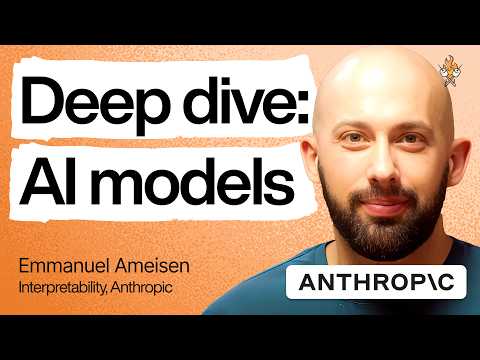
This content is rooted in genuine technical work from Anthropic's interpretability team, but it carries a strong pro-industry bias. While the anecdotes regarding 'Golden Gate Claude' and the math-failure state are fascinating, they are presented as illustrative examples rather than universal proof of model cognition. The speaker’s optimism regarding alignment feels like a calculated, responsible stance, yet it lacks definitive proof that interpretability can scale to future, more complex architectures.
Counterarguments
Critics might argue that interpretability is currently a 'theatre of insight.' We may be imposing human metaphors (like 'planning') onto high-dimensional vector math that has no true semantic equivalent. If our labels for internal states are wrong, our safety interventions could inadvertently create new failure modes.
Who Should Care
- AI Architects: Needs to focus on instrumentation and internal monitoring.
- Policy Makers: Needs to understand that AI safety is an ongoing engineering challenge, not a one-time regulation.
- Enterprise Users: Needs to develop 'model skepticism'—treating model outputs as generated suggestions rather than verified truths.
What to Do Next
- Review current literature on Mechanistic Interpretability.
- Experiment with open-source interpretability tools like Neuripedia.
- Develop internal 'adversarial' probes for your specific use cases.
- Audit your AI stack for hidden dependencies on model behavior.